Why Choose a Bottle Labeling Machine for Your Business?
Choosing a Bottle Labeling Machine can change how efficiently your business prepares products for sale. In a busy packaging area, manual labeling often creates uneven placement, slow output, and avoidable rework. A machine applies labels with controlled pressure and repeatable positioning. This helps bottles look consistent on shelves and during shipment.
It also supports clearer production records. Operators can monitor output, inspect label alignment, and identify problems earlier. For products requiring careful presentation, this consistency strengthens customer confidence. A well-selected system can handle common bottle shapes, adjustable label sizes, and different production speeds. It may also reduce material waste when calibrated correctly. Small improvements matter.
However, automation is not a universal answer. A machine may be unsuitable for very small batches or frequently changing bottle designs. Cleaning, setup, training, and maintenance still require attention. I have seen businesses focus on maximum speed while overlooking changeover time. That decision can create hidden costs. A practical evaluation should compare daily volume, bottle dimensions, label materials, available floor space, and operator experience.
Reliable manufacturers should provide clear specifications, installation guidance, and responsive technical support. Their recommendations should match your actual workflow, not only the machine’s highest rated capacity. Testing sample bottles before purchase is wise. It reveals wrinkles, slipping labels, sensor issues, and difficult adjustments. The best choice is not always the most advanced model. It is the system that performs steadily, fits your process, and remains manageable as your business grows.
What Is a Bottle Labeling Machine?
Why Choose a Bottle Labeling Machine for Your Business?
What Is a Bottle Labeling Machine?
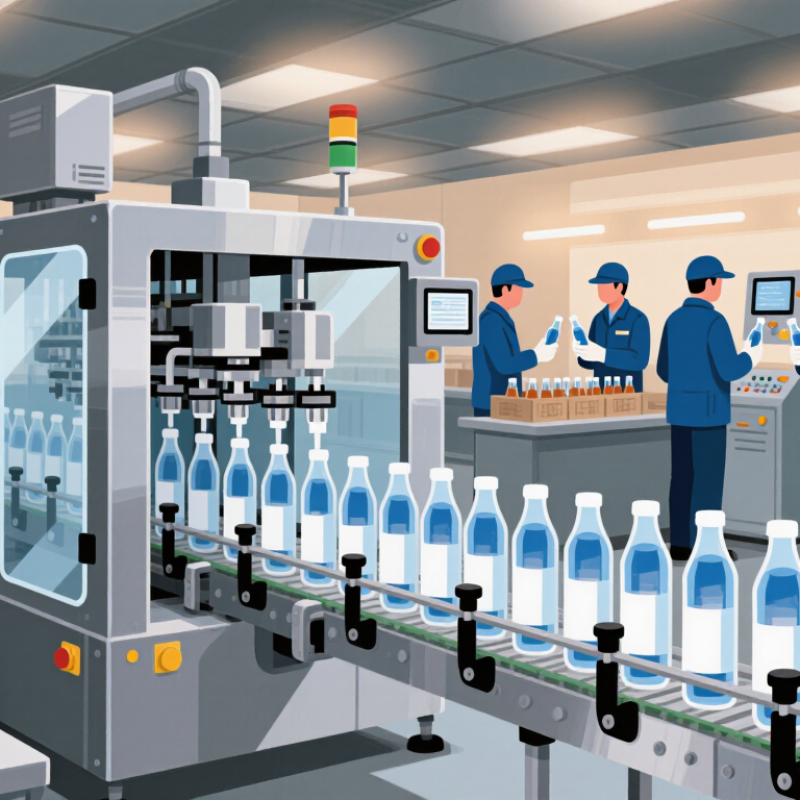
A bottle labeling machine automatically applies labels to containers at a controlled speed. It uses conveyors, sensors, rollers, and positioning systems. Some models handle pressure-sensitive labels, wrap-around labels, or shrink sleeves. The correct choice depends on bottle shape, material, label size, and production volume.
In practical production, operators place bottles onto a conveyor. A sensor detects each container. The applicator then places the label around the bottle or onto its front surface. This process improves placement consistency and reduces repetitive manual work. Smithers reports that the global label market exceeds one trillion labels annually, showing the scale of modern labeling demand. PMMI industry reports also identify automation as a continuing priority for packaging operations. However, speed alone is not enough. A fast machine may still waste labels when bottles wobble or surfaces contain moisture.
Tips: Test real bottles, labels, and adhesives before buying. Check hourly output, changeover time, cleaning access, and sensor accuracy. Ask for documented trial results. Small details matter.
Experience from packaging lines suggests that simple machines can outperform complex systems in stable production. That is not always true, though. Frequent format changes may require adjustable guides and saved settings. Operators should also inspect label alignment during each shift. Even a minor drift can make a shelf-ready product look careless. A labeling machine supports quality; it does not replace process discipline.
How Bottle Labeling Machines Work
A bottle labeling machine turns a loose label roll into a consistent package. The process is precise, but not perfectly forgiving. According to Grand View Research, the global packaging machinery market was valued at approximately $52.83 billion in 2022. Its projected growth reflects stronger demand for faster, more consistent production.
The process starts with an infeed conveyor. Spacing screws or star wheels separate bottles before labeling. A photoelectric sensor detects each container. An encoder tracks conveyor movement. This timing matters. The control system then releases one label from the roll. A peel plate separates the label from its backing paper. An applicator places it against the bottle. Rollers press the label firmly around the surface. For round bottles, a wrap belt can improve contact and reduce wrinkles.
Modern machines may include vision inspection, automatic label adjustment, and touchscreen controls. Deloitte’s 2024 Smart Manufacturing and Operations Survey reported that 86% of manufacturing leaders expect smart manufacturing investments to improve competitiveness. That expectation is reasonable, but equipment still needs careful setup. Bottle diameter, surface moisture, label adhesive, and conveyor speed can change results. Even a clean label roll may create gaps after a long production run. Operators should check alignment, adhesion, and reject rates during every shift. A small sensor error can become a large batch problem. That is why practical testing remains essential.
Types of Bottle Labeling Machines
Why Choose a Bottle Labeling Machine for Your Business?
Bottle labeling machines support faster, cleaner, and more consistent packaging operations. Smithers’ 2024 industry report estimates the global labels market could reach nearly $50 billion by 2028. This growth reflects rising demand for accurate product presentation across beverage, personal care, and household sectors. Manual labeling often creates tilted labels, uneven spacing, and slower production. A machine reduces these problems while giving operators measurable control over speed and placement.
Pressure-sensitive labeling machines suit bottles with smooth surfaces and flexible label designs. They apply adhesive labels without heat or water.
Wrap-around machines place labels around cylindrical containers, making them practical for many beverage bottles.
Front-and-back systems apply separate labels to two panels.
Shrink-sleeve machines cover unusual shapes and offer strong visual impact, but they usually require a heat tunnel.
Roll-fed systems can reduce material costs in high-volume production, though setup can be less forgiving.
Choose carefully. A beautiful machine may still waste time during changeovers. PMMI industry research repeatedly identifies labor availability and automation as major packaging concerns.
In practice, I would test the machine with real bottles, filled products, and humid-room conditions. Check label roll capacity, sensor accuracy, cleaning access, and operator training. Small bottles expose weaknesses quickly. Some businesses also underestimate maintenance time. That mistake is expensive. A reliable decision should compare output speed, label waste, container shape, and future product variations rather than focusing only on the purchase price.
How to Choose the Right Machine for Your Business
Choosing a bottle labeling machine starts with the bottle, not the brochure. Measure container diameter, height, and taper, then check how labels behave on glass or plastic. A wet, chilled bottle may need different adhesive handling than a dry one. PMMI’s 2023 State of the Industry report put U.S. packaging machinery shipments at about $10.9 billion in 2022, showing the scale of investment across the sector. That figure does not identify the right machine for your line; your own production data matters more.
Match machine speed to your actual output, including changeovers and operator pauses. Ask suppliers to test your bottles and labels together, at your planned line speed. Watch for wrinkles near seams and labels drifting around curved surfaces. Check how quickly guides and sensors adjust between bottle sizes. A faster rating looks attractive, but it can disappoint if feeding or inspection becomes the bottleneck. I would leave room for a small amount of uncertainty: real shifts rarely run like a clean factory demonstration.
Tips: Record bottles per minute during a normal shift, not just peak runs. Bring several label rolls and bottle samples to testing. Confirm cleaning access, spare-part availability, and operator training before purchase. Compare total operating costs, too—an inexpensive machine may require more adjustment time.
Why Choose a Bottle Labeling Machine for Your Business?
The chart compares typical operating capacity by machine type. Manual labeling is suitable for small batches, while semi-automatic and automatic systems provide higher throughput and more consistent placement as production volume increases. When choosing a machine, compare your required bottles per hour, available labor, container shape, label material, and expected production growth.
The figures are representative planning benchmarks; actual performance depends on bottle size, label dimensions, product handling, and machine configuration.