Smart Heating Solutions

Top 10 Welded Stainless Steel Pipe Manufacturers?

Choosing among the Top 10 Welded Stainless Steel Pipe Manufacturers takes more than comparing catalogues. Buyers need to assess material traceability, welding controls, dimensional consistency, and delivery capability. The World Stainless Association reported 58.4 million tonnes of global stainless steel melt-shop production in 2023, down 1.2% from 2022. That figure measures stainless steel production, not pipe output. Still, it shows the scale of the material supply chain behind this market.

This guide compares manufacturers using practical indicators: product range, available grades and sizes, quality documentation, testing practices, and service reach. Technical references matter. ASTM A312 covers seamless, welded, and heavily cold-worked austenitic stainless steel pipe, while ISO 1127 addresses dimensions and tolerances for stainless steel tubes. Buyers should confirm the exact standard, grade, and inspection requirements for each order. A certificate alone does not tell the whole story.

Details matter. A pipe may look sound on a rack, yet surface finish, weld consistency, or traceability records can affect fabrication and service life. The manufacturers featured here are intended as a research shortlist, not a universal ranking; the best fit depends on operating conditions, order volume, and local support. That distinction is easy to overlook. Even strong suppliers can differ sharply in lead times, customization, and documentation. Compare current product data and verify claims directly before making a procurement decision.
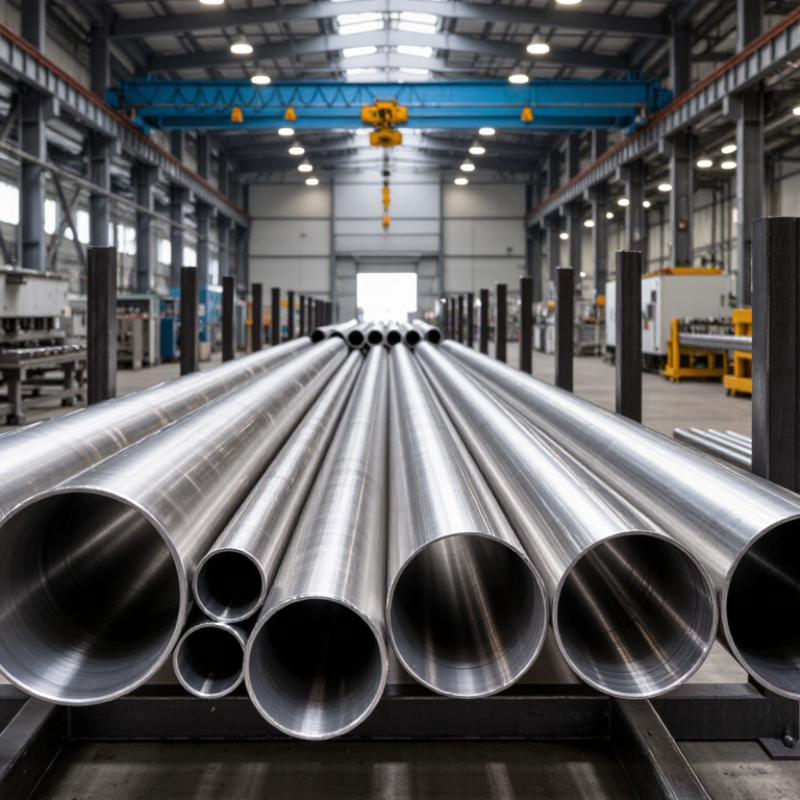
Top 10 Welded Stainless Steel Pipe Manufacturers?

What Defines a Leading Welded Stainless Steel Pipe Manufacturer

A leading welded stainless steel pipe manufacturer is defined by consistent process control, not production capacity alone.

World Stainless reported 58.4 million tonnes of global stainless steel crude production in 2023, up 4.6% from 2022. That scale makes supplier choice more important, but output figures reveal little about an individual mill’s quality. Ask how it controls material chemistry, forming, welding, heat treatment, and inspection. Request traceable records tied to each pipe’s heat number.

For orders specified to ASTM A312/A312M, check that the manufacturer can document the required grade, dimensions, testing, and markings. Review weld-seam inspection records and surface-finish criteria; a bright exterior does not prove soundness inside. Strong suppliers explain deviations clearly and provide consistent test reports. No scorecard is perfect. Compare actual records, not polished claims, and confirm that production samples match the paperwork.

Tips: Request a sample inspection report before placing an order. Check that its heat number, grade, and test results match the pipe. If a supplier cannot explain a missing record, pause and ask why.

Key Standards for Evaluating Welded Stainless Steel Pipe Suppliers

When comparing welded stainless steel pipe suppliers, check whether the quoted standard matches the pipe’s service and construction. ASTM A312 covers welded and seamless austenitic stainless steel pipe; ASTM A358 addresses electric-fusion-welded pipe. European projects may specify EN 10217-7. These standards are not interchangeable by default. Confirm the grade, dimensions, schedule, and intended pressure conditions on the quotation.

Ask for material test certificates linked to heat numbers, then verify that markings on the pipe match the paperwork. Details matter. For critical service, clarify which weld inspections and tests are included, such as radiographic examination, liquid penetrant testing, or hydrostatic testing. Requirements vary by specification and application, so a supplier should explain the inspection scope rather than offer a vague claim of “full testing.” Request sample reports before placing a large order.

Production capability matters, too. A consistent longitudinal weld, smooth internal surface, and controlled dimensional tolerances can affect fit-up and cleaning. Ask how the supplier handles weld finishing, heat treatment, and nonconforming pieces. Not just price. I still find documentation easy to overlook when comparing quick quotations; a low price means little if traceability stops at the packing list. Check lead times, packaging, and whether the supplier can maintain the same specification across repeat orders.

Top 10 Welded Stainless Steel Pipe Manufacturers

A useful Top 10 comparison starts with evidence, not rankings. World Stainless reported 58.4 million tonnes of global stainless steel production in 2023, a 4.6% rise over 2022. That scale creates plenty of supply, but it does not guarantee consistent pipe quality. Buyers should compare each manufacturer’s grade range, wall-thickness tolerance, diameter options, production capacity, and lead-time records. Details matter. A polished brochure is not proof.

For welded stainless steel pipe, request heat numbers, material test certificates, dimensional inspection records, and documented weld testing. ASTM A312 covers welded austenitic stainless steel pipe, while ISO 3834 sets quality requirements for fusion welding; relevant documentation helps verify a supplier’s controls. Ask how the producer handles weld-seam inspection and traceability from steel coil to finished length. Also check sample reports against the actual order specification, not a generic catalogue. World Stainless’ 2023 production figures describe the wider market, not any individual factory’s performance. That distinction is easy to miss. A shortlist of ten is only a starting point; real comparison takes verified, order-specific records.

Product Range, Manufacturing Capabilities, and Quality Control

Top 10 Welded Stainless Steel Pipe Manufacturers: Product Range, Manufacturing Capabilities, and Quality Control

A credible Top 10 list should compare evidence, not promotional claims. World Stainless reported global stainless steel crude production of about 58.4 million tonnes in 2023. This scale increases the need for reliable welded pipe suppliers. Strong manufacturers usually offer 304, 316L, 321, and duplex grades. Their product ranges may cover sanitary, industrial, heat-exchanger, and structural applications. Common sizes extend from small tubing to large-diameter process pipe. Wall thickness, surface finish, and tolerance options reveal manufacturing depth.

Manufacturing capability matters beyond machine capacity. Look for automated forming, TIG or high-frequency welding, online bead monitoring, and controlled annealing. A serious facility should manage coil traceability from receipt to finished pipe. It should also provide documented compliance with ASTM A312, EN 10217, or equivalent standards. The International Organization for Standardization reported that ISO 9001 remains the world’s most widely used quality-management standard. Certification helps, but it does not replace factory evidence.

Quality control should include chemical analysis, dimensional checks, visual weld inspection, eddy-current or ultrasonic testing, and hydrostatic testing when specified. Positive material identification is especially useful for mixed-grade inventories. Ask for mill certificates and sample inspection records. Some suppliers still rely too heavily on final inspection. That is a weakness. In-process controls usually catch defects earlier and reduce repeat failures. Buyers should also review nonconformance rates, corrective-action records, and independent test reports before ranking any manufacturer.

Top 10 Welded Stainless Steel Pipe Manufacturers? - Product Range, Manufacturing Capabilities, and Quality Control

Industry capability overview: representative product and quality-control categories, not a company ranking or a statement about any individual manufacturer. Actual capabilities depend on the mill, specification, and purchase order.

Capability area Typical product range Manufacturing route Common material grades Relevant standards or specifications Typical quality checks
1. General-purpose welded pipe Common nominal pipe sizes and schedules; dimensions are ordered to the applicable specification. Strip or plate forming followed by longitudinal welding and finishing. Common austenitic grades such as 304/304L and 316/316L. ASTM A312/A312M; ASME B36.19M for stainless pipe dimensions where specified. Dimensional inspection, visual examination, and required hydrostatic or nondestructive electric testing per specification.
2. Small-diameter precision tubing Small outside diameters and controlled wall thicknesses; tolerances are product- and order-specific. Precision strip forming, longitudinal welding, and optional drawing or sizing. Typically 304/304L or 316/316L; other grades by order. Applicable ASTM product specification and the purchaser’s dimensional requirements. Outside-diameter and wall-thickness measurement, weld inspection, surface inspection, and traceability checks.
3. Large-diameter, light-wall pipe Large diameters with comparatively light walls; available dimensions depend on forming equipment and the ordered specification. Plate or coil forming with longitudinal or spiral seam welding, depending on product design. Commonly 304L or 316L; grade selection depends on service conditions. ASTM A778/A778M for certain unannealed welded austenitic stainless steel tubular products. Weld examination, dimensional checks, material verification, and tests required by the purchase specification.
4. Heavy-wall or large-diameter pipe Larger diameters and heavier walls produced to project-specific dimensions and acceptance criteria. Plate forming with longitudinal seam welding; process selection is specification-dependent. Austenitic stainless grades, including 304L and 316L, subject to product specification. ASTM A358/A358M covers electric-fusion-welded austenitic chromium-nickel alloy steel pipe for high-temperature service and general applications. Weld procedures and records, visual and dimensional examination, and radiographic or other examination when required.
5. Sanitary and hygienic tubing Tubing specified by outside diameter, wall thickness, surface finish, and end preparation. Welded tube production with controlled internal and external surface finishing as ordered. Commonly 304L and 316L. ASTM A270/A270M for seamless, welded, and heavily cold-worked austenitic stainless steel sanitary tubing. Surface-finish checks, dimensional inspection, weld examination, and required material and product tests.
6. Heat-exchanger and condenser tubing Tube dimensions and lengths selected for exchanger design and the governing product specification. Welded tube forming, seam welding, sizing, and finishing; route varies by product. Austenitic stainless grades specified for the application. ASTM A249/A249M covers welded austenitic steel boiler, superheater, heat-exchanger, and condenser tubes. Dimensional checks and the mechanical, hydrostatic, or nondestructive tests required by the applicable specification.
7. Corrosion-resistant process pipe Pipe ordered by grade, size, wall, and service requirements; corrosion performance depends on the environment and material selection. Longitudinal welded production with heat treatment and finishing as required by the specification. 304L, 316L, and other specified stainless grades. ASTM A312/A312M is a common specification for seamless, welded, and heavily cold-worked austenitic stainless steel pipe. Heat and lot traceability, chemical and mechanical test records, weld examination, and specified pressure or nondestructive testing.
8. High-temperature service pipe Dimensions and grade selected against design temperature, pressure, and the applicable code or specification. Welded pipe production using a qualified welding process and any specified post-weld treatment. Specified heat-resistant or austenitic stainless grades; grade choice is application-dependent. ASTM A358/A358M and ASTM A312/A312M may apply to different product forms and requirements. Review of material certificates, welding documentation, heat-treatment records where applicable, and required weld testing.
9. Duplex stainless welded pipe Project-specific sizes and wall thicknesses; availability depends on grade, forming route, and specification. Welded forming with tightly controlled heat input and any required solution treatment. Duplex grades such as 2205 may be specified; exact grade must match the order requirements. Applicable ASTM/ASME material and product specifications, as stated in the purchase order. Chemical analysis, mechanical tests, weld inspection, and any specified corrosion or microstructure testing.
10. Custom-finished or project-specific pipe Nonstandard lengths, end preparations, finishes, or tolerances defined by project documents. A production route selected to meet the agreed material, geometry, and inspection requirements. Grade specified by the purchaser and confirmed against the service requirements. Applicable ASTM/ASME specification, drawings, and purchase-order requirements. Inspection and test plan, material traceability, dimensional reports, and agreed nondestructive examination.

Specification note: Standards identify requirements for particular product forms; they do not establish that every producer offers every capability listed. Confirm grade, dimensions, manufacturing route, testing, and acceptance criteria against the current standard and purchase documents.

How to Choose the Right Manufacturer for Your Project

Choosing among the top 10 welded stainless steel pipe manufacturers requires more than comparing prices. Start with your project conditions: fluid type, temperature, pressure, diameter, wall thickness, and installation environment. A manufacturer should explain how its welding process suits these demands. Ask whether it uses TIG, laser, or another controlled method, and request sample weld inspection records.

Check material traceability from coil to finished pipe. Each batch should connect to a heat number, mill certificate, chemical analysis, and mechanical test results. Confirm the manufacturer can meet relevant ASTM, EN, or project-specific standards. Independent inspection may be useful for critical service. It adds cost, but missing defects later costs more. Ask about ultrasonic testing, hydrostatic testing, surface finishing, and dimensional tolerances.

Production capacity also matters. A factory may quote an attractive lead time without showing current workload. Request a realistic schedule, packaging details, and examples of similar orders. Visit the facility when possible, or arrange a live quality audit. Look for clean storage, calibrated instruments, clear weld procedures, and trained inspectors. A polished website proves little. I would also check how the supplier handles nonconforming pipes, replacement claims, and technical questions after delivery. This part is often overlooked. No manufacturer fits every project, and even a strong supplier may need closer supervision when specifications are unusual.