Smart Heating Solutions
Choosing an Industrial Gas Alarm system is not simply a matter of comparing prices, sensor counts, or display sizes. Global buyers face different gases, plant layouts, climate conditions, maintenance skills, and emergency procedures. A detector suitable for a refrigerated warehouse may perform poorly near a hot compressor room. Small details matter.
This guide reviews seven industrial gas alarm systems for factories, laboratories, energy facilities, and commercial processing sites. It considers detection technology, response speed, sensor lifespan, calibration needs, communication options, enclosure protection, and installation practicality. The assessment also considers after-sales support, because a reliable alarm is only useful when technicians can test and maintain it correctly.
Trevor Kletz, a respected process-safety expert, wrote, “If you think safety is expensive, try ignorance.” His warning remains relevant. A low-cost system can become expensive when false alarms interrupt production, replacement sensors arrive late, or operators misunderstand warning levels. That risk is easy to underestimate.
Real conditions are rarely perfect.
A strong purchasing decision should begin with the hazard assessment, not a preferred brand. Buyers should confirm target gases, expected concentrations, ambient temperatures, ventilation patterns, hazardous-area requirements, and integration with shutdown systems. No ranking can serve every facility. This comparison is useful, but it still requires engineering review, local commissioning, and documented maintenance planning. Some readers may also find that the most advanced system is not the best choice. Usability, trained personnel, and dependable service often matter more than impressive specifications.
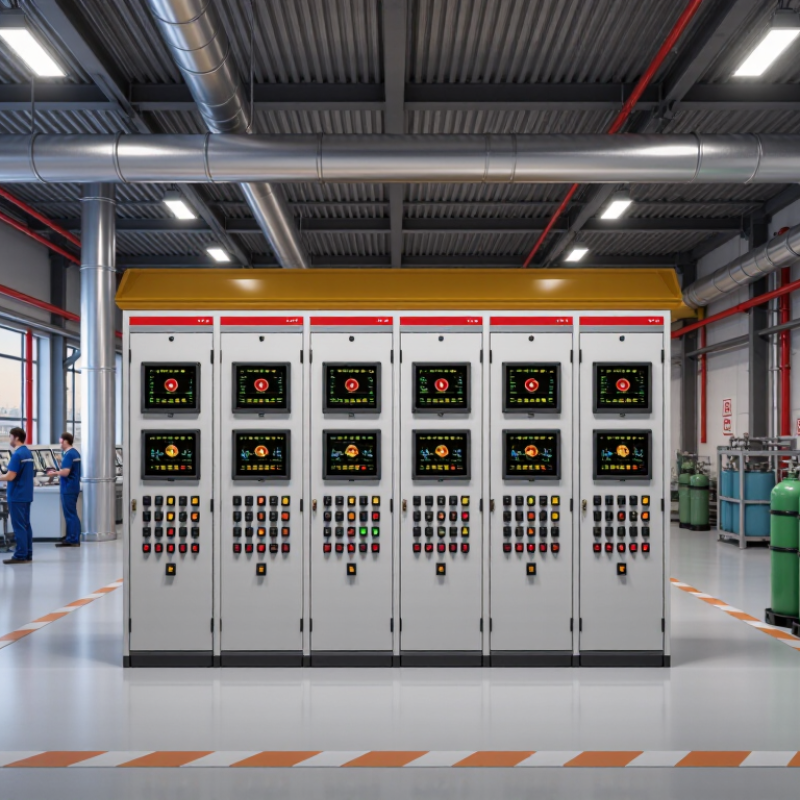
Industrial gas alarm systems detect dangerous concentrations before human senses can respond. Fixed detectors monitor production rooms, boiler areas, storage zones, and confined spaces. Portable monitors protect technicians during inspections or maintenance. Most systems combine gas sensors, visual beacons, sirens, control panels, and ventilation interlocks.
The need is measurable. The International Labour Organization reported nearly three million work-related deaths annually, with about 395 million non-fatal injuries. Gas exposure is only one hazard, but its warning window can be extremely short. NIOSH lists hydrogen sulfide’s IDLH concentration at 100 ppm. Carbon monoxide reaches IDLH at 1,200 ppm. These figures explain why relying on smell, discomfort, or manual checks is unsafe.
A capable system should match the gas, temperature, humidity, ventilation pattern, and response plan. Calibration records matter as much as sensor accuracy. Alarm levels should trigger clear actions, such as evacuation, isolation, or controlled ventilation. Poor placement can create false confidence; a ceiling sensor may miss a heavy gas collecting near the floor. I would not treat an alarm as a complete safety program. Batteries fail, sensors drift, and workers sometimes silence alarms too quickly. Regular bump tests, documented maintenance, and realistic emergency drills make the technology more trustworthy.
Industrial gas alarm systems continuously monitor hazardous atmospheres and provide audible, visual, and remote alerts before gas concentrations reach immediately dangerous levels. The chart compares the NIOSH IDLH concentrations of seven commonly monitored industrial gases. Lower values indicate that dangerous conditions can occur at lower concentrations.
Reference: NIOSH Pocket Guide to Chemical Hazards. IDLH means Immediately Dangerous to Life or Health. Values are shown in parts per million (ppm) and are for hazard comparison, not alarm-setting instructions.
For global buyers comparing seven industrial gas alarm systems, specifications matter more than promotional rankings. Start with target gases and credible failure scenarios. The IEA’s Global Methane Tracker 2024 estimates that fossil fuel operations released nearly 120 million tonnes of methane in 2023. This supports continuous monitoring around valves, compressors, storage areas, and enclosed workspaces. Confirm sensor technology, detection range, response time, calibration method, and cross-sensitivity data. Electrochemical sensors suit many toxic gases, while infrared sensors can support combustible-gas detection. The choice depends on temperature, humidity, ventilation, and maintenance access.
False alarms cost trust. Compare alarm logic, relay redundancy, data logging, and remote communications. IEC 60079-29-1 provides important performance guidance for flammable-gas detectors, while IEC 61508 principles help buyers assess functional safety claims. Request independent test reports, not only supplier declarations. Check ingress protection, corrosion resistance, battery behavior, and operation during power loss. NIOSH exposure guidance should inform alarm thresholds, but site risk assessments must determine final settings. A perfect scorecard is unrealistic. Some facilities still overvalue a fast response and ignore calibration workload. That is a costly weakness. Review total ownership costs over five years, including bump tests, replacement sensors, training, and annual verification. Proof beats promises.
| System Type | Recommended Application | Typical Gas Coverage | Sensor Technologies | Typical Detection Range | Main Alarm Functions | Communication Options | Environmental Protection | Key Selection Advantage |
|---|---|---|---|---|---|---|---|---|
| 1. Fixed Point Gas Detection System | Process plants, boiler rooms, compressor rooms, laboratories, and utility areas | Combustible gases, oxygen, and toxic gases such as carbon monoxide, hydrogen sulfide, chlorine, and ammonia | Catalytic bead, electrochemical, infrared, photoionization, and semiconductor sensors | Gas-specific; commonly ppm for toxic gases and %LEL for combustible gases | Visual and audible alarms, low/high alarm levels, fault alarms, relay outputs, and event logging | 4–20 mA, Modbus RTU, relay contacts, Ethernet, or wireless gateways | Commonly IP65–IP66; hazardous-area versions may require certified enclosures | Continuous measurement with clear alarm zoning and straightforward integration into plant controls |
| 2. Multi-Channel Controller-Based System | Large facilities requiring centralized monitoring of multiple detector points | Multiple combustible, toxic, and oxygen-deficiency hazards across one or more zones | Supports mixed sensor types through compatible transmitters and input modules | Typically configurable by gas type, sensor range, alarm setpoint, and engineering unit | Multi-level alarms, latching or non-latching logic, voting logic, shutdown control, and battery backup options | 4–20 mA, digital fieldbus, Ethernet, RS-485, relay outputs, and SCADA or DCS interfaces | Controller enclosure is often IP-rated; field transmitters must be selected for the installation zone | Best for scalable installations where centralized alarm management and cause-and-effect control are required |
| 3. Wireless Mesh Gas Alarm System | Remote sites, temporary projects, retrofit work, and locations where cabling is difficult | Combustible gases, toxic gases, and oxygen monitoring through wireless detector nodes | Battery-powered electrochemical, catalytic, infrared, or other gas-specific sensors | Gas-specific ranges; wireless transmission does not change the sensor’s measurement range | Local sounder and beacon, network alarm, low-battery warning, communication-loss alarm, and maintenance alerts | Proprietary or standardized wireless protocols, gateways, cellular backhaul, and Ethernet | Often IP65–IP66; radio performance depends on obstacles, distance, antenna placement, and site interference | Reduces installation cabling, but battery life, network redundancy, and radio-site surveys must be evaluated |
| 4. Open-Path Gas Detection System | Perimeter monitoring, tank farms, pipeline corridors, loading racks, and large outdoor areas | Selected combustible or toxic gases that can be measured along a defined optical path | Infrared or ultraviolet optical absorption technology, depending on the target gas | Reported as concentration multiplied by path length, commonly LEL·m or ppm·m | Low and high gas alarms, beam-block alarm, misalignment alarm, signal-failure alarm, and automatic diagnostics | 4–20 mA, relays, RS-485, Ethernet, and integration with safety or control systems | Typically rugged outdoor housings; performance can be affected by fog, rain, dust, vibration, and beam obstruction | Covers a long detection path and can identify gas clouds that may pass between conventional point detectors |
| 5. Open-Path Infrared and Acoustic System | High-pressure gas facilities, compressor stations, well sites, and areas with rapid-release hazards | Combustible gas releases detectable by infrared absorption or ultrasonic leak noise | Open-path infrared and ultrasonic acoustic sensors; some systems combine both methods | Gas-specific optical path measurements or acoustic leak thresholds; values depend strongly on site conditions | Gas alarm, acoustic leak alarm, equipment fault alarm, signal-quality monitoring, and configurable voting logic | 4–20 mA, relays, digital communication, Ethernet, and safety-system interfaces | Designed for demanding outdoor areas; ultrasonic performance depends on background noise, wind, and sensor placement | Can provide rapid warning for certain high-pressure releases without waiting for a gas cloud to reach a point sensor |
| 6. Portable Area Gas Monitoring System | Confined-space entry, maintenance shutdowns, construction areas, and emergency response | Oxygen, combustible gases, and selected toxic gases using interchangeable or multi-gas configurations | Electrochemical, catalytic, infrared, and photoionization sensors depending on the gas combination | Commonly %vol for oxygen, %LEL for combustibles, and ppm for toxic gases | Local audible, visual, and vibrating alarms; STEL and TWA alarms may be available for toxic gases | Short-range wireless, mesh networking, docking stations, USB, Bluetooth, or cellular gateways | Usually rugged and splash-resistant; exact IP rating and drop resistance must be verified for each model | Flexible for changing work locations, but requires bump testing, calibration, charging, and documented user training |
| 7. Safety PLC-Integrated Gas Detection System | Critical process facilities requiring automatic shutdown, ventilation, isolation, or emergency response actions | Site-specific combustible, toxic, and oxygen hazards connected to a safety or control architecture | Fixed detectors connected through analog, digital, or certified safety input modules | Configured according to each detector’s gas type, range, calibration, and safety requirements | Alarm voting, emergency shutdown, ventilation control, fire-and-gas logic, bypass management, and diagnostics | Redundant Ethernet, safety fieldbus, 4–20 mA, digital I/O, relay outputs, and DCS or ESD interfaces | Field equipment must match the hazardous-area and environmental requirements; system architecture requires formal validation | Suitable for high-consequence hazards when engineered, tested, and maintained within a documented functional-safety lifecycle |
Global Buyer Evaluation Checklist
Confirm the target gas, required alarm setpoints, sensor response time, calibration method, operating temperature, humidity, pressure, hazardous-area classification, enclosure rating, communication protocol, power-failure behavior, spare-part availability, local service capability, and conformity with applicable requirements such as IEC 60079, IEC 61508, IEC 61511, IEC 62990, EN 45544, ATEX, IECEx, UL, CSA, or other project-specific regulations.
Industrial gas detection is a safety investment, not merely a purchasing category. The ILO and WHO estimated 2.78 million work-related deaths annually worldwide, with hazardous exposures contributing significantly. Seven leading system types serve different risks: fixed-point detectors, open-path detectors, portable monitors, personal alarms, wireless networks, area monitoring units, and integrated gas-and-flame systems.
Fixed-point devices suit compressor rooms and process lines. Open-path units protect long corridors and storage boundaries. Portable monitors follow technicians into confined spaces.
Wireless networks reduce cabling around temporary work areas. Area monitors provide audible and visual warnings across larger zones. Integrated systems connect gas signals with ventilation, shutdown, or emergency control systems.
The seventh choice, personal alarms, offers direct protection during inspections and maintenance.
Selection should follow a documented hazard assessment, not a catalog ranking. IEC 60079-29-1 addresses combustible gas detector performance, while ISO 26142 covers open-path detection applications. Buyers should verify response time, calibration intervals, ingress protection, sensor cross-sensitivity, and operating temperature. Alarm visibility matters in noisy plants. So does language support.
A practical trial is still valuable. No system is perfect. Sensors drift, wireless signals weaken, and workers sometimes ignore alarms. The ILO reports that occupational injuries remain a major global burden, so maintenance deserves the same attention as installation. Independent testing, trained users, and clear replacement records make the system more dependable across borders.
For global buyers, the seven strongest industrial gas alarm options cover different risks: fixed point, open-path, aspirating, wireless mesh, portable, controller-based, and hybrid systems. Fixed-point detectors suit boiler rooms and process areas. Open-path units monitor long, exposed routes. Aspirating systems can sample inside cabinets or poorly accessible spaces. Wireless systems reduce cabling, but metal structures may weaken signals. Portable alarms support maintenance teams. Controller-based systems coordinate sensors, relays, and ventilation. Hybrid systems combine several methods.
Certification must match the installation location. IEC 60079-29-1 addresses gas detector performance, while IEC 60079-29-2 supports selection, installation, use, and maintenance. Hazardous-area equipment may require IECEx or ATEX approval. North American projects often request certification from an accepted testing body. Safety-related shutdown functions may also require a suitable IEC 61508 safety integrity level. Certification alone is not enough. The certificate scope, gas type, temperature range, enclosure rating, and sensor technology must fit the site. I have seen specifications fail because buyers checked the logo but missed the gas concentration range.
Tips: Map likely leak points before choosing sensors. Keep detectors near breathing zones for toxic gases, and near ceilings for lighter gases. Follow manufacturer spacing guidance and local fire codes. Test alarms with certified gas, not only button checks. Record calibration dates, alarm delays, relay actions, and ventilation responses. Small details matter. Some plans still underestimate dust, condensation, airflow, and sensor poisoning. Recheck the design after commissioning.
The seven best industrial gas alarm systems are not identical. The right choice depends on your facility, workforce, and target market.
Start with the gases present, their leakage points, and exposure risks. A chemical room may need fixed sensors, audible alarms, and remote notifications. A maintenance team may also require portable detectors for confined spaces.
Review sensor technology carefully. Electrochemical sensors suit many toxic gases, while infrared sensors can detect combustible gases with fewer oxygen-related limitations. Consider temperature, humidity, dust, vibration, and ventilation. These details affect readings. Check calibration intervals, replacement parts, alarm history, and emergency power. Local certification requirements also matter, especially when equipment crosses borders. A system accepted in one market may need additional testing elsewhere.
Tips: Walk through the facility during a normal shift. Note where workers stand, where gases could collect, and whether alarms can be heard beside machinery. Ask suppliers for test records, training materials, and response times. Do not select the cheapest system automatically. False alarms can create distrust, but missed alarms create greater danger. Integration with ventilation controls or a central monitoring platform may improve response, yet complex integration can introduce new failure points. I have seen specifications look excellent on paper but perform poorly when sensors were installed near strong airflow. Leave room for practical review. Recheck the design after installation, and document every calibration clearly.