Smart Heating Solutions
China’s clutch manufacturing sector serves a global vehicle base that continues to demand reliable replacement parts. According to the International Organization of Motor Vehicle Manufacturers (OICA), global vehicle production exceeded 93 million units in 2023. This installed base creates sustained demand for transmission components, including the clutch kit 240mm used in passenger cars, light commercial vehicles, and selected industrial applications.
Market research from Mordor Intelligence identifies the automotive aftermarket as a major growth area, supported by longer vehicle ownership and rising maintenance requirements. However, market forecasts differ by research method and regional coverage. That matters. Buyers should not rely on headline figures alone. They need verifiable factory evidence, consistent dimensions, and dependable technical communication.
Leading Chinese manufacturers commonly provide complete kits with friction discs, pressure plates, release bearings, and alignment tools. Experienced suppliers should explain friction material selection, diaphragm spring load, spline compatibility, and allowable runout. IATF 16949 certification can indicate structured automotive quality management, while batch inspection records provide stronger practical evidence. A clean test report is useful, but real performance matters more.
Global buyers should compare production capacity, sample approval procedures, warranty terms, packaging protection, and export experience. A 240mm disc may appear standardized, yet hub profiles and spline counts can vary significantly. Small errors create installation problems. Some product listings still omit these details, which deserves careful review.
This guide examines China’s top clutch kit 240mm manufacturers through product quality, engineering capability, customization support, and supply reliability. The aim is practical: helping distributors and vehicle-service businesses choose suppliers with evidence, not promises.
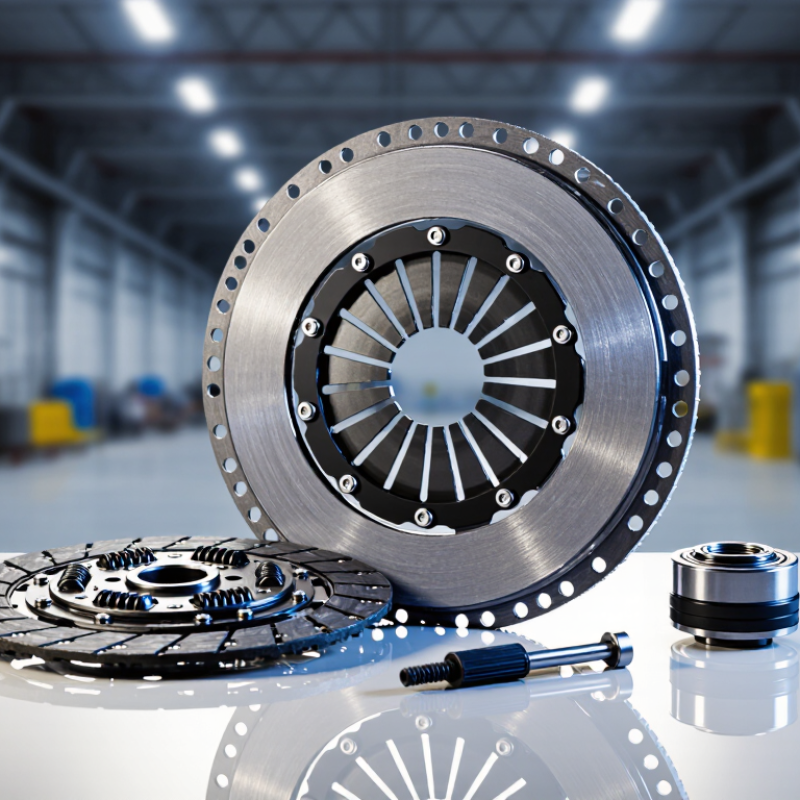
A 240mm clutch kit uses a friction disc measuring approximately 240 millimeters across. This size commonly serves passenger cars, light commercial vehicles, and performance-oriented applications. The kit usually includes a clutch disc, pressure plate, release bearing, and alignment tool. Each component must match the flywheel, gearbox input shaft, and engine torque output. A larger disc is not automatically better. Compatibility matters more than diameter alone.
In practical fitting work, technicians inspect flywheel runout, spline condition, and hydraulic travel before installation. A worn flywheel surface can cause shudder, even with a new kit. The pressure plate must provide stable clamping force without making the pedal unnecessarily heavy. Manufacturers should verify heat resistance, friction consistency, and spring durability through controlled testing. Buyers should also request dimensional drawings, material information, and traceable quality records. These details support safer global sourcing and more dependable vehicle operation.
Tips: Confirm vehicle data, engine torque, spline count, and flywheel type before ordering. Keep the friction surface clean. Never force the gearbox into position. Allow proper bedding-in after installation. Some fitting errors still occur, even in experienced workshops, so a final clearance check is worthwhile.
Evaluating a Chinese 240mm clutch kit manufacturer requires more than comparing prices. S&P Global Mobility reported that the average U.S. vehicle age reached 12.6 years in 2024. Older vehicles support steady replacement demand, but buyers still need dependable fitment and durability. Check pressure plate load, disc runout, friction coefficient, hub spline accuracy, and release bearing noise. Request test records from several production batches, not one perfect sample. A supplier can pass one sample and still miss consistency.
Production control matters as much as engineering. Review incoming material inspection, heat-treatment records, torque testing, and final packaging checks. IATF 16949 certification can indicate structured automotive quality management, but certification alone proves little. Audit corrective-action records and traceability by lot number. The 2024 Joint Channel Forecast from the Auto Care Association and AASA valued the U.S. automotive aftermarket at approximately 594 billion dollars in 2023. This scale increases demand for reliable replacement parts, while returns can quickly damage margins. A low quote can still be expensive.
Tips: Ask for a 240mm dimensional drawing, friction-material specification, and warranty-return analysis. Compare three production samples under identical conditions. Verify the manufacturer’s export experience and destination-market requirements. Do not overlook carton strength; a bent disc is unusable. One practical weakness is rushed auditing. Allow time for a factory visit, even when the first report looks convincing.
International buyers need more than a 240mm measurement when selecting a clutch kit supplier. The 240mm format is common in passenger vehicles and light commercial applications, but compatibility depends on spline count, pressure plate design, flywheel depth, and release bearing geometry. OICA reported more than 93 million motor vehicles produced worldwide in 2023. That scale creates strong demand for reliable replacement components and consistent export support.
Experienced suppliers should provide tested friction materials, clear torque ratings, batch traceability, and installation guidance. S&P Global Mobility reported that the average vehicle age in the United States reached 12.6 years in 2024. Older vehicles often require careful inspection of the flywheel and hydraulic system, not only a new clutch kit. A supplier serving international buyers should also confirm packaging strength, moisture protection, documentation, and regional fitment data. A perfect fit is not guaranteed by diameter alone.
Tips: Request drawings before ordering. Confirm spline details and engine application. Ask for test reports and warranty terms. Compare samples when possible. Small errors become expensive after shipment. UN trade data also shows how widely automotive parts move across borders, so customs-ready documents matter. In practice, buyers should review supplier response times and corrective-action records. Low pricing can look attractive, but inconsistent friction performance may create installation complaints. The difficult part is that catalogue data is sometimes incomplete, and buyers should challenge unclear specifications before payment.
| Data Dimension | Typical 240mm Clutch Kit Specification | Common Buyer Requirement | International Purchasing Checkpoint |
|---|---|---|---|
| Nominal clutch diameter | 240 mm | Must match the original vehicle or transmission specification | Confirm whether the stated diameter refers to the friction disc or pressure plate |
| Kit configuration | Usually includes clutch disc, pressure plate and release bearing | Complete replacement set preferred for installation consistency | Verify whether pilot bearing, alignment tool or hydraulic release component is included |
| Friction lining material | Organic, low-metallic or other application-specific friction material | Stable engagement, low noise and suitable thermal resistance | Request material composition, friction coefficient data and applicable test records |
| Disc construction | Commonly a sprung-hub disc with torsion-damping springs | Reduced driveline vibration and smooth torque transfer | Check spring layout, hub profile, rivet quality and disc runout tolerance |
| Spline compatibility | Varies by application; spline count, major diameter and pilot diameter must match | Exact interchangeability with the target transmission | Provide drawing or sample measurements before production approval |
| Pressure plate type | Diaphragm-spring design is widely used in passenger and light commercial vehicles | Consistent clamp load and acceptable pedal effort | Request clamp-load curve, balancing information and release-load data |
| Balancing requirement | Dynamic balancing is commonly applied to rotating clutch assemblies | Low vibration during engine and transmission operation | Confirm balancing method, allowable residual imbalance and inspection records |
| Quality management | Automotive suppliers commonly operate under ISO 9001; IATF 16949 may apply to qualified automotive production | Documented process control and traceability | Request current certificates and confirm that the certificate scope covers clutch components |
| Product validation | Dimensional inspection, hardness checks, runout checks and functional testing are commonly used | Stable fit, engagement and service performance | Define pre-shipment inspection items and acceptance limits in the purchase order |
| Packaging protection | Individual protective packaging with moisture and impact protection | No deformation, corrosion or contamination after ocean or road transport | Confirm carton strength, palletization, moisture control and shipping marks |
| Export documentation | Commercial invoice, packing list and transport document; certificate of origin where required | Accurate customs clearance and destination-market compliance | Agree on HS classification, Incoterms, documentation language and consignee details |
| Application matching | Vehicle-specific fitment rather than diameter alone | Correct installation without modification | Match vehicle model, engine, transmission, production year and original part reference |
| Supplier evaluation method | Technical conformity, production capability, inspection system and export experience | Reliable repeat supply and consistent batch quality | Approve samples first, then use a written specification, inspection plan and warranty terms |
China Top Clutch Kit 240mm Manufacturers for Global Buyers
For global buyers, a 240mm clutch kit should be judged by evidence, not catalog language. Experienced sourcing teams request material certificates, dimensional reports, and production records before approval. Quality systems should align with recognized automotive requirements, using controlled drawings and traceable batch numbers. Each friction disc needs consistent thickness, runout, and lining adhesion. Small deviations can create pedal vibration or early wear.
Testing should reflect real service conditions. Manufacturers commonly inspect torsional springs, spline accuracy, pressure-plate load, and release bearing movement. A dynamometer test can examine engagement, thermal resistance, and repeated cycling. In practical checks, inspectors measure disc runout with a dial gauge and verify clamp load across several samples. Packaging also matters. Moisture protection and clear labels reduce damage during long transport.
Production capability is more than installed machinery. It includes trained operators, calibrated tools, backup suppliers, and corrective-action records. A reliable factory can show sample approval procedures and explain responses to failed tests. No process is perfect. Some suppliers may rely too heavily on final inspection instead of preventing defects upstream. Buyers should challenge that weakness, review improvement data, and order pilot batches before larger commitments. This takes time.
Quality Standards, Testing, and Production Capabilities
This chart summarizes the main quality-control areas commonly reviewed when sourcing 240mm clutch kits. The percentage values represent the relative inspection emphasis assigned to each area in a typical supplier audit, rather than data from any individual company or brand.
China Top Clutch Kit 240mm Manufacturers for Global Buyers
For global buyers, export service should begin with clear technical communication. A reliable manufacturer confirms the 240mm diameter, spline dimensions, torque range, and application details before quoting. Export teams should provide commercial invoices, packing lists, certificates of origin, and accurate shipping marks. Moisture-resistant wrapping matters during long sea transport. Small details prevent costly delays.
Customization may include friction material, pressure plate settings, release bearing options, and carton design. Some buyers need private labeling or multilingual installation instructions. Ask for sample approval before mass production. Request test records for clamp load, rotational balance, wear resistance, and operating temperature. The data should match the supplied batch, not only an old laboratory report. This is where many buyers become too trusting.
Supplier selection requires more than a low unit price. Review factory capacity, inspection equipment, production traceability, and warranty procedures. A capable supplier can explain tolerance limits in practical terms. They should also identify unsuitable applications instead of accepting every order. Check pre-shipment inspection rules, replacement handling, and response times in writing. I have seen attractive quotations fail because packaging was weak or technical drawings were incomplete. That experience is easy to overlook. A small trial order, independent inspection, and staged payment can reveal problems before a full container leaves the factory.