Smart Heating Solutions

What Is an SAE LED Lightbar and How Does It Work?

An Sae Led Lightbar is a long, multi-diode lighting unit designed to improve vehicle visibility. It may provide warning signals, work lighting, or a controlled driving beam. Its LEDs convert electrical energy into light with rapid response and relatively low power use. However, performance depends on more than brightness. Optics, heat control, wiring quality, and mounting position all influence the result.

The term “SAE” can be misunderstood. It usually refers to testing or performance standards, not automatic approval for every road. SAE J575 and SAE J595 may apply to different lamp testing and warning-light requirements. Always check the product’s documentation and local vehicle regulations. A credible manufacturer should identify test references, photometric data, operating voltage, and environmental ratings. Vague labels deserve caution. The terminology is not always perfectly consistent.

Look closely at the installation. A lightbar should sit firmly, remain visible, and avoid blocking the driver’s view. Poor grounding can cause flickering. Excessive heat can shorten LED life, even when the housing feels solid. A properly selected model should match the vehicle’s electrical system and intended task. This guide examines how an Sae Led Lightbar produces light, distributes its beam, manages heat, and connects safely. It also considers practical limitations that product photos often hide. Bright is not always better. In some conditions, glare reduces useful visibility. Reliable selection requires measured specifications, careful installation, and realistic expectations.
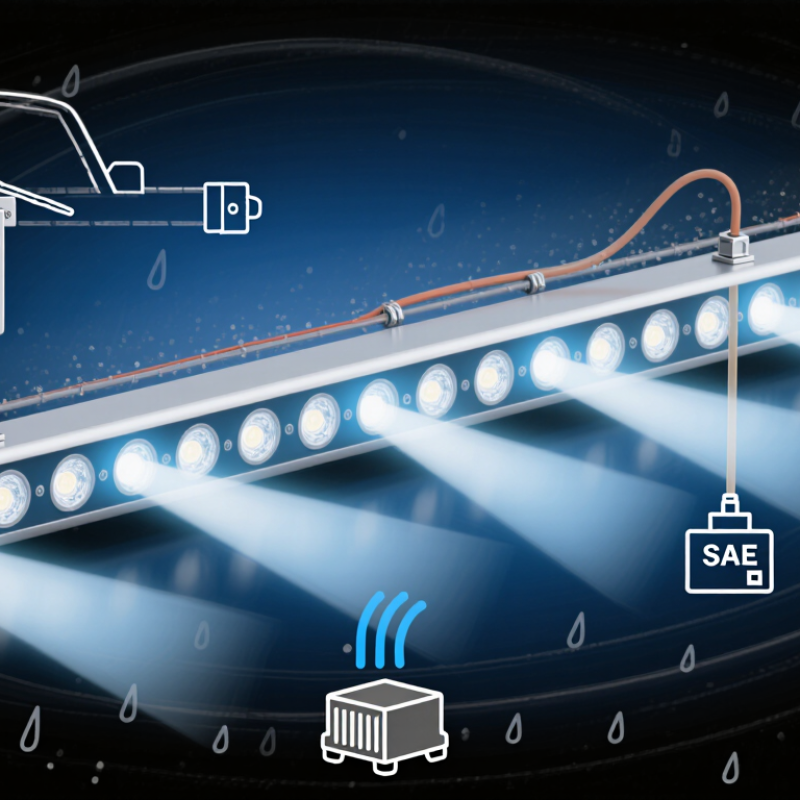
What Is an SAE LED Lightbar and How Does It Work?

SAE LED Lightbar: Definition and Main Components

What Is an SAE LED Lightbar and How Does It Work?

An SAE LED lightbar is a vehicle lighting assembly designed around SAE performance requirements. These requirements may address visibility, beam patterns, color, intensity, and durability. SAE marking does not automatically mean universal legal approval. Local regulations still matter.

The main light source is a group of light-emitting diodes mounted on a circuit board. Each diode converts electrical current into focused light with limited heat loss. A driver regulates current and protects the LEDs from voltage changes. Reflectors or lenses shape the beam, helping produce a wide flood pattern or a narrower warning pattern. The housing protects these parts from rain, dust, vibration, and road debris. Aluminum often supports heat removal, although its design matters more than its appearance.

Wiring connects the bar to a suitable power source and control switch. Correct grounding is essential. A weak connection can cause flickering, even when the LEDs remain functional. Mounting brackets keep the unit stable, but loose hardware can change the beam angle during driving. In workshop inspections, technicians should check seals, cable insulation, lens damage, and heat buildup. One detail is easy to miss: a bright lightbar can still perform poorly if its optics scatter light or create glare. Specifications can also be confusing. They should be compared with measured output, operating temperature, and the intended vehicle application.

How SAE Ratings Classify Lightbar Performance

How SAE Ratings Classify Lightbar Performance

An SAE rating describes tested optical performance, not simply how bright a lightbar looks in a product photo. For many warning lightbars, SAE J845 classifies output into Class 1, Class 2, or Class 3. Class 1 represents the highest tested performance; Class 3 represents a lower level. The classification comes from measurements taken under defined test conditions, including light intensity and viewing angles. Small details matter.

The rating helps compare devices using a common method, but it does not predict every real-world view. Mounting height, nearby surfaces, weather, and the observer’s angle can change what a driver sees. A bar may meet its stated class in testing, yet appear less effective when partly blocked by a roof edge. The label can feel more definitive than it is. Check the test standard and the exact lightbar configuration, since changes to lenses or modules may affect performance.

Tips: Compare the same SAE standard and class, then check the tested configuration. Look for clear test documentation, not just a bold rating on a box. If possible, assess the lightbar from several viewing angles in its intended mounting position.

How an SAE LED Lightbar Produces and Shapes Light

What Is an SAE LED Lightbar and How Does It Work?

An SAE LED lightbar uses multiple light-emitting diodes to create a controlled beam. Each diode converts electrical energy into light through a semiconductor junction. A driver regulates current and protects the LEDs from voltage changes. The lightbar also uses an aluminum housing to move heat away from the circuit board. Heat matters. Excessive temperature can reduce brightness and shorten service life.

The beam shape comes from optics placed over each LED. Small lenses collect scattered light and direct it forward. Reflectors can widen the pattern or create a narrower spotlight. Some designs combine flood and spot optics for broader road coverage. An SAE-compliant model is tested against specific performance requirements, including beam distribution, visibility, and electrical behavior. The marking does not automatically mean every installation performs identically.

Mounting angle changes the result. A lightbar aimed too high may create glare, while one mounted too low can waste useful distance. Wiring size, grounding, and fuse selection also affect stable operation. In field inspections, vibration and water intrusion often cause more trouble than the LEDs themselves. I have found that real installations are rarely perfect. Lens scratches, loose brackets, and uneven vehicle surfaces can quietly reshape the beam. Checking the cutoff, fasteners, and connector seals after installation is practical, though easy to overlook.

What Is an SAE LED Lightbar and How Does It Work? - How an SAE LED Lightbar Produces and Shapes Light

Dimension What It Is or Does How It Produces or Shapes Light Practical Detail
Meaning of “SAE” SAE refers to standards published by SAE International; it is not a particular LED technology or a guarantee that every lightbar meets the same performance level. Applicable standards define test methods and performance requirements for specific types of vehicle warning lights. Check the product documentation for the exact standard and classification claimed.
LED emitters Semiconductor devices that emit light when electrical current passes through them. LEDs generate light at their emitting surfaces. Their color depends on the LED and, in some designs, an optical filter or colored lens. LEDs are arranged in modules so the lightbar can create multiple illuminated sections.
Optics: lenses and reflectors Clear or colored lenses, reflectors, and other optical surfaces positioned around the LED modules. These surfaces refract, reflect, or diffuse light to control its direction and spread, rather than simply allowing it to travel straight out of the LED. Optical design affects the lightbar’s viewing angles and how its output appears from different positions.
Module placement and coverage LED modules are distributed along the lightbar and may be aimed in different directions. Forward-, side-, and rear-facing optics can direct light toward different parts of the surrounding area. The actual coverage pattern depends on the module layout and optical design of the particular lightbar.
Flash patterns and control An electronic controller switches LED modules on and off in selected sequences. Timed activation creates warning patterns, including alternating or grouped flashes. The sequence changes when the controller selects a different pattern. Patterns and available functions vary by model and installation.
Electrical supply and driver The vehicle’s electrical system supplies power; driver circuitry regulates current to the LED modules. The driver helps operate the LEDs within their electrical limits while the controller manages the selected flash sequence. Power requirements and wiring should follow the lightbar’s installation instructions.
Heat management LEDs and their driver electronics produce heat during operation. The housing and heat-spreading components help conduct heat away from the electronics. Adequate thermal design supports reliable operation; heat handling varies between designs.
SAE J595 and SAE J845 SAE J595 addresses directional flashing optical warning devices; SAE J845 addresses optical warning devices. These standards include performance and test provisions for the device types they cover; they do not describe one universal lightbar design. A standard number alone does not establish the classification or compliance of every model; consult its test or certification documentation.
Overall light output The visible warning signal results from the combined output of the LEDs, optics, module arrangement, and flash control. The lightbar shapes the emitted light into intended directions and timed patterns; measured performance depends on the complete assembly. LED count alone does not determine viewing coverage or standards compliance.

Electrical Systems, Controls, and Mounting Requirements

What Is an SAE LED Lightbar and How Does It Work?

An SAE LED lightbar uses multiple light-emitting diodes, optics, and a regulated electrical circuit. The circuit converts vehicle power into controlled current for each LED group. SAE performance references usually concern warning-light output, flash patterns, visibility, and testing conditions. They do not automatically approve every installation. Check the product’s technical data and applicable vehicle requirements.

Electrical planning should begin with current draw, not appearance. A dedicated fused circuit protects the wiring during a fault. Use wire sized for the distance and load, with sealed connectors near exposed areas. A relay can prevent high current from passing through a small dashboard switch. The control unit may select steady, alternating, or programmed flash patterns. Keep control wiring separate from high-current cables when possible. Heat still matters. LEDs use less energy than older lamps, but their driver circuits and housings still need airflow. I would also verify voltage while the engine runs, because charging systems can produce higher readings than expected.

Mounting affects both reliability and light distribution. Brackets should sit on a rigid surface, with fasteners suited to vibration and the vehicle’s material. Tighten them evenly, but avoid crushing the housing. Leave clearance around the bar for cooling and cleaning. A level installation usually provides more predictable coverage. Test for roof flex, loose hardware, and cable chafing after the first drive. One overlooked detail is grounding; a poor ground can imitate a failed controller. Practical installations are rarely perfect, so recheck alignment after rain, dust, and repeated vibration.

SAE LED Lightbar: Estimated Current Draw at 12.8 V

The chart shows the electrical relationship between LED lightbar power and current draw on a typical 12.8 V vehicle electrical system. Current is calculated using I = P ÷ V. Actual values vary with operating mode, wiring losses, controller efficiency, and ambient temperature. Proper mounting should provide a secure load-bearing connection and avoid obstructing required warning visibility.

Applications, Safety Standards, and Maintenance Considerations

What Is an SAE LED Lightbar and How Does It Work?

An SAE LED lightbar uses light-emitting diodes to produce warning signals across a wide viewing angle. It commonly serves emergency, utility, construction, roadside assistance, and snow-removal vehicles. Internal optics shape each beam, while a controller manages flash patterns, brightness, and synchronization. A lightbar can appear extremely bright at night, yet remain less visible through heavy rain or dust.

Safety depends on more than brightness. SAE performance standards may address optical output, flash characteristics, color, and testing methods. However, an SAE reference does not automatically make every installation legal in every location. Vehicle owners should verify local requirements for permitted colors, mounting height, activation, and nighttime use. The bar must not obstruct factory lamps, mirrors, cameras, or the driver’s view. Correct wiring and an adequately rated fuse are essential. Poor grounding can create intermittent flashes.

Maintenance is practical and easy to overlook. Inspect the lens for cracks, yellowing, and trapped moisture. Check mounting bolts after rough-road driving. Examine cables for rubbing near hinges, sharp edges, and hot engine parts. Clean the lens with mild soap, not abrasive chemicals.

Test every section, including rear-facing modules and directional functions. A dark segment may indicate a failed module, loose connector, or controller fault. Do not assume brightness means health.

I have seen clean-looking bars fail because water entered through a damaged seal. Record inspections, but leave room for judgment; unusual flicker or heat deserves professional testing.