How to Choose the Best Auto Pipe Welding Machine?
Choosing the right Auto Pipe Welding Machine requires more than comparing prices or motor ratings. The machine must match your pipe material, diameter range, wall thickness, joint design, and production schedule. A stainless-steel fabrication shop may need precise heat control, while a carbon-steel pipeline workshop may prioritize travel speed and rugged construction. Small details matter. Check torch alignment, clamping stability, cooling performance, and access to replacement parts. A machine that looks impressive in a brochure may struggle beside a dusty workshop floor.
Reliable selection begins with evidence from real operating conditions. Ask suppliers for weld samples, cycle-time data, service records, and operator training details. Review whether the control system supports repeatable current, voltage, travel speed, and shielding-gas settings. These factors influence penetration, bead appearance, and rework rates. Experienced welders should test the machine with actual pipe sections, not only demonstration materials. That step is often skipped.
There is no universal best choice. Even experienced buyers can misjudge future production needs. A compact machine may reduce initial costs but limit larger projects later. An oversized system may consume space and budget without improving quality. Consider safety features, calibration support, warranty coverage, and long-term maintenance. Dependable manufacturers explain limitations clearly. That matters. The best Auto Pipe Welding Machine should deliver consistent welds, practical control, and measurable value across daily operations. Recheck every assumption before signing the purchase order.
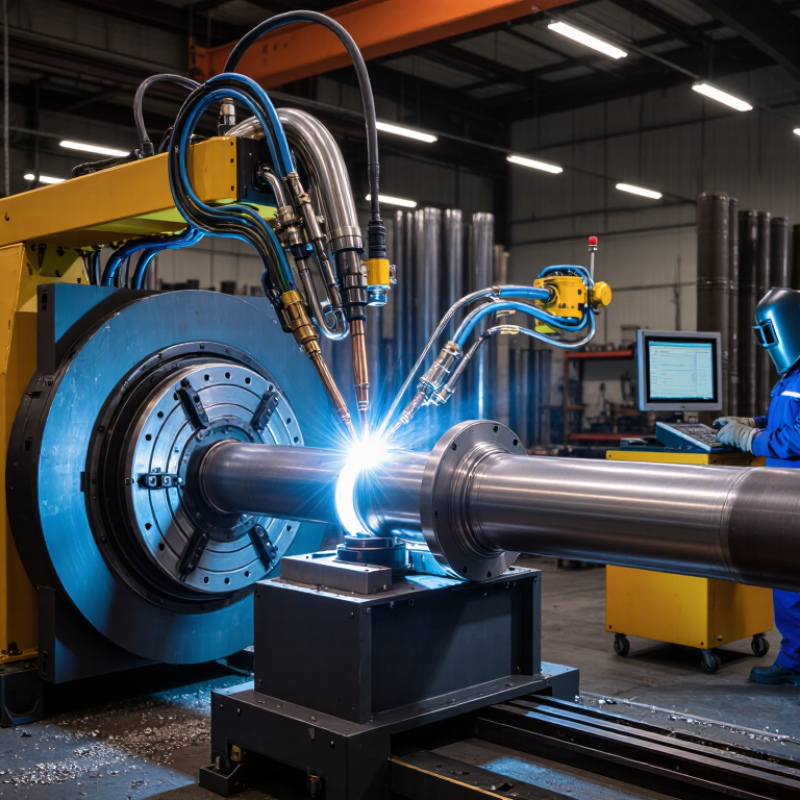
Define Pipe Size, Wall Thickness, Material, and 6G Welding Requirements
How to Choose the Best Auto Pipe Welding Machine?
Define Pipe Size, Wall Thickness, Material, and 6G Welding Requirements
Start with the pipe, not the machine brochure. Record outside diameter, wall thickness, joint design, and required tolerances. A 6-inch carbon-steel pipe with a 12-millimeter wall needs different current control than a thin stainless-steel tube. Check whether the machine supports root, fill, and cap passes separately. It should also maintain stable arc length around the full 6G position. That position is demanding.
Material changes the process window. Carbon steel may tolerate higher heat input, while stainless-steel needs tighter thermal control. Nickel alloys require careful shielding and slower travel. Review the applicable qualification procedure under ASME Section IX or the relevant project standard. Wire diameter, shielding gas, torch angle, and cooling method must match the procedure. Small mismatches create visible defects.
Project scale matters, too. The International Energy Agency’s World Energy Investment 2024 report estimated global energy investment above 3 trillion dollars, including over 2 trillion dollars in clean energy. The U.S. Bureau of Labor Statistics projects about 42,600 annual openings for welding-related occupations through 2033. These figures suggest sustained demand for repeatable welding, but they do not prove automation will suit every workshop. I have seen operators overvalue travel speed while ignoring fit-up variation. Poor alignment can defeat an advanced system. Test actual coupons using the largest and smallest pipe sizes, then inspect penetration, distortion, and repair rates before purchase.
Compare GTAW, GMAW, and Orbital Welding for Joint Quality and Speed
How to Choose the Best Auto Pipe Welding Machine?
Choosing an auto pipe welding machine starts with the joint, not the machine label. GTAW delivers excellent arc control and a clean, narrow weld profile. It suits stainless steel, thin-wall pipe, and critical root passes. However, GTAW usually needs slower travel and careful gas purging. Small contamination can damage the root.
GMAW GMAW increases deposition speed and supports longer production runs. It works well on thicker pipe and repeated shop assemblies. Proper wire selection, shielding gas, and torch angle remain essential. Poor settings may create spatter, lack of fusion, or an uneven bead. Faster is not always better. Inspect cross-sections, not only surface appearance.
Orbital welding offers strong repeatability around tubes and fixed piping. Automated travel can maintain consistent speed, current, and rotation. This improves joint uniformity when operators follow a qualified procedure. Yet setup requires accurate fit-up, clean tube ends, and reliable programming. I would compare cycle time with inspection results, purge records, and repair rates. A fast weld that needs rework is not efficient.
One overlooked issue is access. A compact manual GTAW setup may outperform automation in cramped areas. Test samples under real conditions before selecting equipment. Include wall thickness, material, diameter, joint position, and production volume in the evaluation.
Verify Machine Capacity Against ASME B31.3, API 1104, and ISO 3834
Choosing the best auto pipe welding machine begins with standards, not advertised speed. Verify its working range against ASME B31.3, API 1104, and ISO 3834 requirements. These standards address different needs, so one machine cannot satisfy every project automatically.
Check pipe diameter, wall thickness, material grade, welding position, and joint design. Confirm the machine can control current, voltage, travel speed, shielding gas, and heat input accurately. Your qualified WPS and PQR should support the planned settings. Ask for test records, calibration evidence, and traceable weld data. A machine may produce an attractive bead, yet still fail procedure qualification testing.
Tips: Build a trial weld using actual pipe material and thickness. Inspect penetration, alignment, arc stability, and heat-affected zones. Confirm that operators can repeat the result, not merely achieve it once. Review the latest editions with a qualified welding engineer. Small details matter.
ISO 3834 also makes quality control more systematic. Look for reliable monitoring, documented maintenance, and clear nonconformance records. API 1104 projects may require specific inspection and qualification controls. ASME B31.3 work can demand stronger process documentation, depending on service conditions. Do not treat a machine certificate as proof of code compliance. The equipment supports compliance; qualified procedures, personnel, inspection, and records complete the evidence. I have seen selection decisions focus too heavily on speed. That can create unstable starts, excessive repair work, or uneven production. A slower machine with better control may be the safer choice.
How to Choose the Best Auto Pipe Welding Machine?
Verify the machine’s diameter range, wall-thickness capacity, welding position, heat input control, travel speed, and data-recording functions against the applicable project requirements.
This chart is a high-level applicability map: 1 means the standard is a relevant reference for that verification dimension, while 0 means it is not the primary source for that topic. ASME B31.3 addresses process piping, API 1104 addresses pipeline welding, and ISO 3834 addresses quality requirements for fusion welding. Confirm the exact edition, project specification, material, joint design, WPS/PQR, welder qualification, inspection plan, and acceptance criteria before selecting the machine.
Assess Automation Accuracy, Travel Speed, Data Logging, and Repeatability
How to Choose the Best Auto Pipe Welding Machine?
Choosing an auto pipe welding machine requires more than comparing motor power or advertised speed. Automation accuracy should be checked at the torch, not only on the control screen. Examine encoder calibration, seam tracking, torch alignment, and movement around changing pipe diameters. Small path errors can create uneven bead width or incomplete sidewall fusion.
Travel speed must match the welding procedure and material thickness. Faster movement may reduce heat input, but it can also weaken penetration when settings are poorly balanced. Test sample joints at several speeds, then inspect bead shape, penetration, and distortion. Watch the machine during starts, stops, and position changes. These moments often reveal problems hidden during steady movement.
Data logging adds practical value during production. Useful records include current, voltage, wire feed speed, travel speed, gas flow, oscillation, and timestamps. A clear log helps technicians compare a good weld with a failed one. Repeatability deserves equal attention. Run the same program across multiple cycles and measure bead width, penetration, and joint position. Try different operators if possible. The result should remain stable without constant manual correction.
Do not trust one test.
A machine can perform well on clean coupons and struggle with real pipe fit-up. Surface variation, joint gaps, and awkward access may expose weaknesses. I would leave room for review after installation, because early assumptions are often wrong. Reliable selection comes from measured results, traceable records, and repeatable weld quality.
Calculate Total Cost Using Cycle Time, Consumables, Labor, and Maintenance
Choosing the best auto pipe welding machine starts with total cost, not purchase price. Measure cycle time on real pipe joints, including fit-up, welding, cooling, inspection, and repositioning. A machine saving 12 minutes per joint may outperform a cheaper unit. For example, at 80 joints per week and a loaded labor rate of $35 per hour, reducing cycle time from 42 to 30 minutes saves about $336 weekly. The U.S. Bureau of Labor Statistics reported median annual pay near $50,000 for welders in its May 2023 data, before overtime and benefits.
Consumables also deserve close measurement. Record wire, shielding gas, tungsten, grinding discs, and rejected joints for at least one production month. The American Welding Society identifies procedure control and welder qualification as major quality factors, so a faster machine is not economical if it increases rework. A 3% rejection rate can quietly erase expected savings. Mine did once.
Maintenance must be priced per operating hour. Include scheduled service, calibration, spare torches, liners, software support, and downtime during repairs. Industry 4.0 research from Deloitte’s 2024 smart manufacturing survey found that manufacturers increasingly prioritize productivity and operational resilience, but digital equipment still needs disciplined maintenance. Compare annual maintenance cost with available production hours. A useful formula is: total cost per joint equals depreciation, labor, consumables, maintenance, energy, and rework divided by accepted joints. Use supplier claims carefully. Verify them on your pipe diameter, wall thickness, position, and welding procedure.