Smart Heating Solutions

China Top Alko Leaf Springs Manufacturer?

Choosing a China top alko leaf springs manufacturer requires more than comparing catalog prices. Buyers need dependable engineering, consistent materials, and clear production evidence. The right supplier should understand axle loads, suspension geometry, spring curvature, and real operating conditions. A polished website is useful, but it is not proof.

This guide examines how manufacturers produce and verify alko leaf springs for trailers and light commercial applications. It considers steel grade, heat treatment, shot peening, surface protection, and dimensional control. Factory experience matters when a spring must fit accurately beside an axle, U-bolts, bushes, and mounting plates. Small differences in eye diameter or camber can create installation problems.

Reliable manufacturers should provide drawings, inspection records, sample testing, and traceable batch information. Ask how they measure load capacity, fatigue performance, hardness, and corrosion resistance. Photos of a production line help, although independent inspection offers stronger confidence. Customer references can reveal delivery consistency and after-sales support.

There is no universal “best” supplier.

The correct choice depends on application, quantity, certification needs, and service expectations. Some manufacturers may offer attractive prices but limited technical communication. Others may provide stronger documentation with higher initial costs. That trade-off deserves careful review. A responsible sourcing process compares factory capability with field requirements, not marketing language alone. This approach helps buyers identify a dependable China alko leaf springs manufacturer and avoid costly fitment or durability surprises.
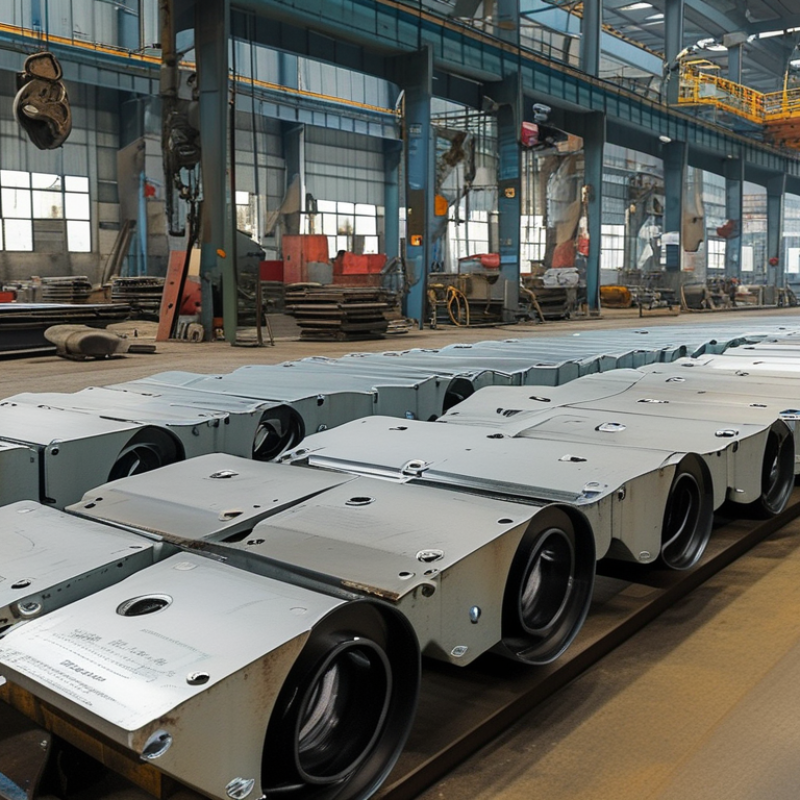
China Top Alko Leaf Springs Manufacturer?

What Defines a Top Chinese AL-KO Leaf Spring Manufacturer?

What Defines a Top Chinese Leaf Spring Manufacturer?

A top Chinese leaf spring manufacturer is defined by engineering discipline, not factory size. It should control steel chemistry, heat treatment, shot peening, and final assembly. In practical audits, I look for numbered material batches and test records matching each shipment. Load testing should reflect the trailer’s real axle weight, not only a convenient laboratory rating. Small details matter. An uneven spring eye can cause noise, wear, and unstable handling.

A reliable manufacturer provides accurate drawings, tolerance data, fatigue results, and traceable inspection reports. Its engineers should explain why a spring thickness or camber suits a specific trailer. Independent inspections can add confidence, especially for long-distance transport applications. Production consistency also matters; one excellent sample proves little. I have seen suppliers focus heavily on appearance while overlooking bushing alignment. That mistake deserves careful review.

Tips: Request samples from different production batches. Confirm dimensions after coating and assembly. Ask for material certificates and fatigue-testing methods. Check whether the factory records corrective actions when a batch fails. A site visit may reveal practical issues, such as poor storage, mixed components, or unclear labeling. These details are not dramatic, but they strongly influence reliability.

Material Standards: 51CrV4 and 60Si2Mn Steel at 1,200–1,500 MPa

China Top Leaf Springs Manufacturer?

For heavy-duty leaf springs, material choice controls fatigue life, load stability, and manufacturing consistency. Two widely specified steels are 51CrV4 and 60Si2Mn. After heat treatment, both can reach approximately 1,200–1,500 MPa tensile strength. However, strength alone does not guarantee reliable service.

In production inspections, I check chemical composition, hardness, decarburization, and surface cracks. A typical spring is heated, formed, quenched, and tempered under controlled conditions. 51CrV4 offers strong hardenability and good fatigue performance. 60Si2Mn provides high elastic strength and suits repeated loading. Results depend on section thickness and furnace control. A perfect figure on paper can still fail. This point is often underestimated.

Tips: Request mill certificates and heat-treatment records. Confirm tensile strength at the finished part, not only the raw bar. Inspect shot-peened surfaces under suitable lighting. Measure spring arc and free height after cooling. Keep batch traceability. Small deviations matter. A supplier should also provide sample testing, dimensional reports, and failure-analysis support. I would not approve a production batch from hardness data alone. Fatigue testing remains essential, although test conditions may not fully represent rough roads, uneven loads, or poor maintenance.

Load Ratings and Axle Compatibility for 750–3,500 kg Trailer Systems

Choosing a Leaf Spring Manufacturer for 750–3,500 kg Trailer Systems

Leaf springs must match axle capacity, not only trailer weight. A 750 kg axle needs different spring rates, eye dimensions, and deflection limits than a 3,500 kg axle. The European Commission’s 2023 road-freight statistics use 3,500 kg as an important vehicle-weight threshold. This makes accurate rating control essential for light commercial trailers. SAE J2807 also stresses verified tow-rating calculations, including axle loads, tongue weight, and braking forces. Static testing is not enough.

A practical inspection begins with the axle tube, spring length, center-bolt position, and mounting width. For a 3,500 kg axle, equal loading suggests about 1,750 kg per wheel before dynamic effects. Uneven cargo can raise one side sharply. A 750 kg system may use compact springs, but thin leaves do not automatically mean poor quality. Material grade, shot peening, camber control, and fatigue testing matter more. UNECE Regulation No. 55 also highlights compatibility between towing components and their rated loads. I would not approve a spring from its load number alone. The number can mislead. Request test records, measured deflection curves, and axle-specific fitment data. Real roads expose weaknesses that laboratory tables sometimes hide.

China Top Alko Leaf Springs Manufacturer? - Load Ratings and Axle Compatibility for 750–3,500 kg Trailer Systems

Trailer System Typical Axle Capacity Recommended Spring Capacity Typical Spring Construction Typical Eye-to-Eye Length Typical Spring Width Common Axle Compatibility Typical Application
Light-duty single axle 750 kg 375 kg per spring
2 springs per axle
2–3 leaves
Slipper or double-eye design
600–700 mm
unloaded, eye centre to eye centre
45–50 mm 750 kg straight or drop axle with matching spring seats and hanger spacing Small utility trailers, light landscaping trailers and compact equipment trailers
Single axle utility 1,000 kg 500 kg per spring
2 springs per axle
3–4 leaves
Double-eye or slipper-end design
650–750 mm
unloaded, eye centre to eye centre
50–60 mm 1,000 kg axle using standard trailer spring hangers and compatible bush dimensions General-purpose box trailers, small cargo trailers and garden machinery trailers
Medium-duty single axle 1,500 kg 750 kg per spring
2 springs per axle
4–5 leaves
Double-eye design commonly used
750–850 mm
unloaded, eye centre to eye centre
60 mm 1,500 kg beam axle with spring-centre spacing, bush size and seat width verified before installation Braked cargo trailers, boat trailers and medium-duty plant trailers
Heavy-duty single axle 2,000 kg 1,000 kg per spring
2 springs per axle
5–6 leaves
Double-eye or slipper-end design
800–900 mm
unloaded, eye centre to eye centre
60–70 mm 2,000 kg braked axle with matching spring seats, hanger geometry and shock-absorber clearance Heavy cargo trailers, vehicle transporters and industrial utility trailers
High-capacity single axle 2,500 kg 1,250 kg per spring
2 springs per axle
5–6 leaves
Reinforced double-eye or slipper design
850–950 mm
unloaded, eye centre to eye centre
60–70 mm 2,500 kg braked axle; verify wheel-end rating, spring-seat spacing and chassis mounting points Plant transporters, compact car trailers and high-load commercial trailers
Heavy-duty tandem axle 3,000 kg total
typically 1,500 kg per axle
750 kg per spring
4 springs across 2 axles
4–5 leaves
Matched spring sets with equal ride height
750–850 mm
unloaded, eye centre to eye centre
60 mm Two matched 1,500 kg axles with equalizer, hanger spacing and centre-to-centre geometry checked Tandem cargo trailers, boat trailers and medium equipment trailers
Maximum listed tandem system 3,500 kg total
typically 1,750 kg per axle
875 kg per spring
4 springs across 2 axles
5–7 leaves
Heavy-duty matched spring sets
850–950 mm
unloaded, eye centre to eye centre
60–70 mm Two 1,750 kg braked axles, or an equivalent approved tandem arrangement, with matched equalizers and hardware Commercial equipment trailers, vehicle transporters and high-capacity cargo trailers

Selection note: The capacities shown are typical axle-system targets, not a substitute for the axle, trailer or spring manufacturer’s rating. Actual compatibility depends on spring length, width, unloaded camber, leaf thickness, eye or slipper design, bush diameter, hanger spacing, axle-seat position, equalizer geometry and required suspension travel. The combined rating of the springs should not exceed the certified capacity of the axle, wheels, tyres, hubs, brakes or trailer chassis.

Quality Testing: ISO 9001, 100,000-Cycle Fatigue, and Crack Inspection

Choosing a reliable leaf spring manufacturer requires more than comparing prices or catalog photos. Quality begins with a controlled production system based on ISO 9001 principles. This system should connect incoming steel inspection, heat-treatment records, dimensional checks, and final release documents. Each spring needs traceable batch information. Operators should verify thickness, arc height, eye diameter, and surface condition with calibrated tools. Small deviations can change suspension performance.

Fatigue testing provides practical evidence under repeated loading. A 100,000-cycle test can expose premature deformation, loose eyes, or fracture risks that static inspection may miss. Test fixtures should reflect the spring’s intended load and mounting position. Engineers should record force, displacement, cycle count, and temperature.

After testing, inspectors examine edges, bolt holes, and high-stress zones for cracks. Magnetic particle or other suitable non-destructive methods can support visual inspection. Not every report is perfect. A clean result does not remove the need for sampling and process review. Experienced technicians still question unusual sounds, uneven wear, or inconsistent measurements. That habit matters. Reliable quality is built through evidence, repeat checks, and honest correction when a batch fails to meet expectations.

Supplier Comparison: OEM Fit, MOQ, Lead Time, and Export Certifications

China Top Leaf Spring Manufacturer?

Choosing a leaf spring supplier requires more than comparing unit prices. OEM fit starts with accurate drawings, axle load data, eye dimensions, center bolt location, and required camber. A capable factory should confirm these details before production. Sample springs should match mounting points without forced adjustment. That matters in real workshops.

MOQ can vary by material, tooling, and customization. Some suppliers accept small trial orders, while others require larger batches. Ask whether tooling fees are separate. Lead time also needs careful checking. Standard parts may ship within a few weeks, while new designs require testing and approval. A written production schedule is useful, but delays still happen. Port congestion, material shortages, and drawing changes can affect delivery.

Export readiness should include clear commercial invoices, packing lists, certificates of origin, and material or inspection reports where required. Quality systems such as ISO 9001 can support consistency, but certification alone does not prove spring performance. Request hardness results, load testing records, surface treatment details, and traceability codes. One often-overlooked point is packaging. Heavy springs need rust protection and reinforced crates. Otherwise, good parts may arrive damaged. A supplier comparison sheet should record MOQ, sample cost, lead time, inspection method, export documents, and response speed. Price remains important, but it should not decide everything.

The benchmark compares anonymized supplier profiles using four practical sourcing criteria: OEM fit, MOQ flexibility, lead-time performance, and export-certification coverage. Scores are normalized to 100 for screening purposes; current drawings, production schedules, and certificates should be verified before purchasing.