China Top 10 EV Charging Points Manufacturers
China’s EV charging industry has moved from scattered pilot projects to a competitive manufacturing ecosystem. This article examines China Top 10 Ev Charging Points Manufacturers and the capabilities behind their market positions. It considers product quality, charging speed, connector compatibility, software integration, safety testing, and after-sales support.
Fatih Birol, Executive Director of the International Energy Agency, said, “Electric cars are quickly becoming a reality for drivers around the world.” His observation also highlights a practical challenge: electric vehicles need dependable charging access, not only attractive specifications. A busy highway station may require liquid-cooled cables, load balancing, payment flexibility, and weather-resistant housings. A residential unit may need simpler installation and quieter operation.
The manufacturers reviewed here serve different application settings. Some focus on high-power DC fast chargers. Others build compact AC units for homes, offices, and apartment buildings. Their export experience, certification coverage, production scale, and maintenance networks also deserve attention.
Numbers can mislead.
A large factory does not automatically provide reliable field performance. Likewise, the fastest charger may not suit every site. Real purchasing decisions involve grid capacity, local regulations, installation costs, warranty terms, and daily traffic patterns. These factors are sometimes underexplained in industry rankings.
This overview aims to offer a practical, evidence-based starting point for buyers, distributors, project developers, and investors. It does not treat any manufacturer as universally superior. Instead, it compares strengths, limitations, and likely use cases. That approach feels less polished, but it is more honest. The best Ev Charging Points supplier depends on the project, the users, and the infrastructure surrounding each installation.
Definition and Role of EV Charging Points in China
China Top 10 EV Charging Points Manufacturers
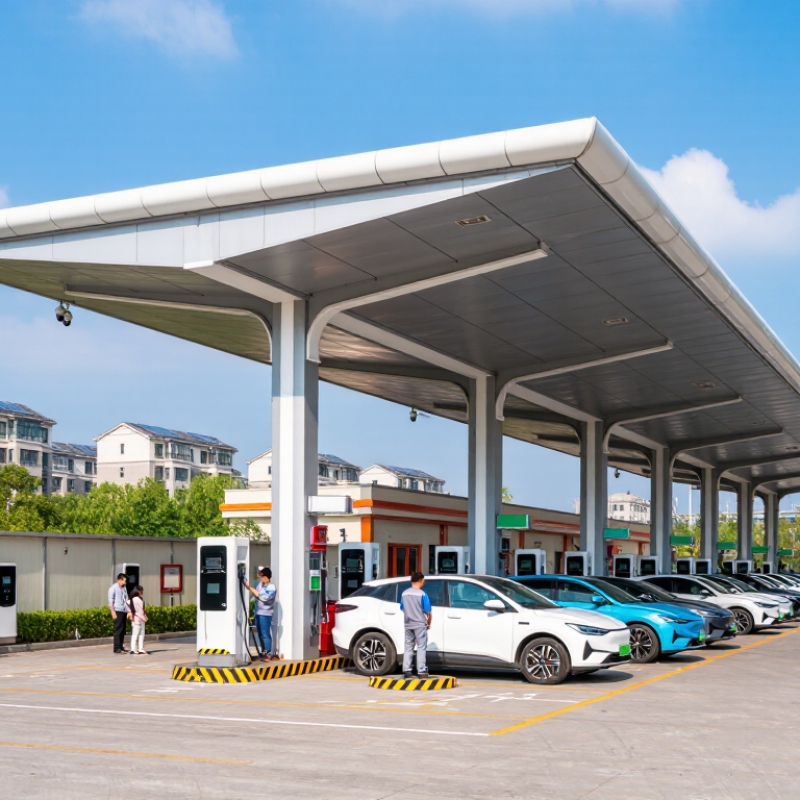
An EV charging point is equipment that safely transfers electricity to an electric vehicle. It includes the connector, control system, meter, communication unit, and protective devices. In China, charging points commonly provide AC charging for homes and workplaces, or DC fast charging for public sites. The difference matters. AC units are usually slower but gentler on local power systems. DC units can deliver substantial energy within minutes, requiring stronger grid connections and careful thermal management.
Charging points support China’s transport network beyond simple battery charging. They help private drivers charge overnight, enable electric buses to follow fixed routes, and keep commercial fleets operating during tight schedules. Public stations along highways also reduce range anxiety between major cities. Site performance depends on more than rated power. Cable length, parking design, payment access, weather protection, and maintenance response can change the user experience.
Field evaluations often reveal an uncomfortable detail: a powerful charger is not always a useful charger. A station may advertise fast output but deliver less power when several vehicles share one cabinet. Broken screens, unclear signs, or poor drainage can create practical failures. Reliable assessment should examine safety records, connector standards, uptime data, energy accuracy, and after-sales support. Some published figures also deserve questioning. Independent testing and transparent operating data remain essential when comparing China’s leading charging point manufacturers.
Key Technologies Used in Chinese EV Charging Equipment
China Top 10 EV Charging Points Manufacturers
Chinese EV charging equipment increasingly depends on power electronics, thermal control, and intelligent communication. AC chargers usually serve homes, offices, and parking facilities. DC fast chargers use rectifiers to convert grid electricity into controlled direct current. Silicon carbide components can reduce switching losses and improve efficiency. However, higher power is not automatically better. Grid capacity, cable temperature, and vehicle limits still matter.
Liquid-cooled charging cables support high current without becoming excessively heavy. Temperature sensors monitor connectors, power modules, and internal cabinets. When heat rises, the system can reduce output before damage occurs. During field evaluations, engineers also check insulation, grounding, ingress protection, and emergency stop response.
Small installation details matter. Poor ventilation can shorten component life, even when the charger looks advanced.
Software is equally important. Dynamic load balancing distributes available electricity among several vehicles. Cloud platforms record energy use, faults, and maintenance history. Open communication protocols can improve compatibility with different vehicles and operating systems. Some systems also support vehicle-to-grid functions, but local grid rules and battery warranties require careful review. Cybersecurity deserves more attention than it often receives. Secure authentication, encrypted data, and controlled firmware updates help protect charging networks. Performance claims should be tested under winter cold, summer heat, voltage variation, and repeated daily use. Laboratory results alone can miss practical weaknesses.
Market Segmentation of China’s EV Charging Point Manufacturers
China’s EV charging market is best segmented by use case, power level, and deployment environment. The China Electric Vehicle Charging Infrastructure Promotion Alliance reported 2.73 million public charging piles by the end of 2023. Private chargers added a much larger base. This split creates different manufacturer strengths: AC equipment for homes and offices, DC systems for commercial sites, and high-power units for intercity travel.
Public charging manufacturers compete through uptime, payment integration, and maintenance coverage. Residential suppliers focus more on compact design, load management, and installation safety. Highway operators require rugged cabinets, liquid-cooled cables, and stable performance during peak traffic. The International Energy Agency reported that China held more than half of the world’s public charging points in 2023. Scale matters, but it does not explain every purchasing decision.
Market segmentation also follows customer ownership. Utilities and municipalities often prioritize network compatibility and long service life. Fleet operators examine charging speed, software scheduling, and electricity costs per vehicle. Commercial property owners may value installation flexibility over maximum output. China’s charging market grew quickly, yet regional standards and uneven utilization remain practical concerns. Bigger is not always better. Some comparisons still rely too heavily on shipment volume, which can hide weak after-sales support and idle equipment. Sources: IEA, Global EV Outlook 2024; China Electric Vehicle Charging Infrastructure Promotion Alliance, 2023 Annual Data.
China EV Charging Point Market Segmentation
Public charging point stock by charging mode, China, year-end 2020–2024
China’s public charging infrastructure expanded from approximately 0.81 million points in 2020 to 3.58 million in 2024. AC charging points remained the larger segment, while the share of DC fast-charging points increased as demand for faster charging and highway electrification grew.
Source: China Electric Vehicle Charging Infrastructure Promotion Alliance (year-end public charging point statistics); values shown in millions of charging points.