Smart Heating Solutions
China has become a major sourcing base for vacuum packaging used in meat processing, retail, and foodservice. Buyers now expect more than low prices. They need stable sealing, documented materials, and dependable export support.
Smithers’ flexible packaging market analysis identifies food packaging as a major driver of global film demand. Its findings also show continued interest in high-barrier structures that protect products from oxygen and moisture. This matters when selecting Vacuum Bags Meat for chilled beef, pork, poultry, or processed cuts. A reliable bag should remain clear, resist punctures from bones, and form a tight seal around uneven portions. Small details matter. A weak corner can waste an entire carton.
China’s best wholesale suppliers usually offer PA/PE coextruded films, custom thicknesses, embossed options, and printed formats. Experienced buyers should request migration documentation, batch traceability, seal-strength data, and sample testing before placing large orders. USDA FSIS guidance stresses strict control of vacuum-packaged refrigerated foods, while the FDA Food Code highlights temperature and handling controls. Packaging alone cannot guarantee safety.
No supplier is perfect. Even a strong factory may show variation between batches. That is why audits, production samples, and written specifications remain essential. Compare oxygen transmission rate, water vapor transmission rate, puncture resistance, sealing temperature, and minimum order quantity. A practical evaluation should include real meat portions, chilled storage, transport simulation, and opening tests. This guide examines how to identify capable Chinese wholesale suppliers and avoid attractive prices that hide inconsistent performance.
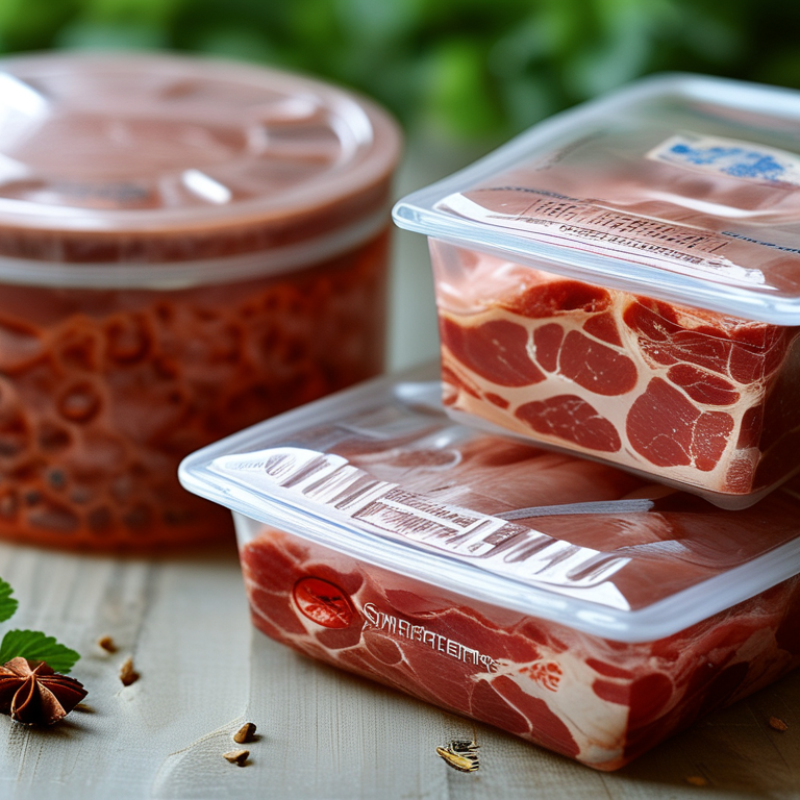
Different meats require different vacuum bag structures. Fresh beef usually needs strong PA/PE bags with high puncture resistance. Large cuts have sharp edges and heavy weight. A thicker film helps prevent leaks during storage and transport. Poultry releases more liquid, so reliable seals and good moisture resistance are important. For seafood, select bags with strong oxygen barriers. This helps protect color, odor, and texture during chilled storage.
Bone-in products need extra protection. Standard bags can fail around exposed bones. Bone guard film or thicker shrink bags may work better. Processed meats, such as ham and sausages, often need clear bags with stable sealing performance. Shrink bags can provide a tighter appearance after controlled heating. However, overheating may damage the film. I have found that one bag type rarely fits every product perfectly.
Tips: Test bags with real meat, not empty samples. Check seal strength, leakage, punctures, and storage temperature. Ask suppliers for film thickness, material structure, and food-contact documentation. Do not choose only by the lowest wholesale price. A cheaper bag can create costly waste. Also, review the packing machine settings, because sealing problems may come from equipment rather than the bag.
China Best Vacuum Bags for Meat Wholesale Suppliers
For meat packaging, material choice affects freshness, sealing strength, and food safety. Most reliable vacuum bags use multilayer nylon and polyethylene. Nylon provides puncture resistance, while polyethylene supports heat sealing and direct food contact. Some applications require stronger oxygen barriers, especially for fatty meat or extended chilled storage. A clear bag is not automatically safer.
Suppliers should provide food-contact declarations, migration test results, and lot traceability. Manufacturing should follow recognized hygiene systems, such as GMP and HACCP principles. Test the bag with real products, including sharp bones, wet surfaces, and cold temperatures. Seals must remain tight after vacuuming, stacking, and transport. Standards differ by destination market, so buyers should verify current regional requirements rather than trust a general certificate.
Tips: Request samples from several production lots. Check seal width, odor, pinholes, and peeling under stress. Leave a small headspace near the seal. Do not ignore weak corners. A thicker bag may improve durability, but it can also raise cost and packaging waste. This trade-off deserves review. Even experienced buyers sometimes focus on price first and discover sealing problems later. Supplier audits, clear specifications, and documented corrective actions make wholesale purchasing more dependable.
| Data Dimension | Typical Specification for Meat Vacuum Bags | Wholesale Importance | Recommended Verification |
|---|---|---|---|
| Common Film Structure | Multilayer polyamide/polyethylene (PA/PE) film; PA provides puncture and mechanical resistance, while PE provides heat sealing and moisture protection. | Suitable for fresh meat, processed meat, poultry, seafood, and other products with sharp bones or edges when the gauge is properly selected. | Review the layer structure, food-contact declaration, film thickness, and production specification. |
| Optional Barrier Layer | EVOH or another approved barrier resin may be incorporated when lower oxygen transmission is required. | Helps reduce oxygen exposure and can support color and shelf-life objectives, subject to the product, process, and distribution conditions. | Request oxygen transmission rate data at a stated temperature and relative humidity, such as 23°C and 50% RH. |
| Film Thickness | Common commercial constructions are approximately 70–180 micrometres (µm), depending on bag size, bone content, handling, and required puncture resistance. | Thicker film generally improves durability but increases material consumption, shipping weight, and unit cost. | Check average thickness, minimum thickness, tolerance, and a sample cross-section where applicable. |
| Bag Types | Three-side-seal bags, side-gusset bags, chamber pouches, and embossed bags for compatible external suction equipment. | The bag type must match the vacuum machine, product dimensions, filling speed, and packaging workflow. | Conduct a machine compatibility trial using the intended product and sealing cycle. |
| Available Sizes | Typical stock widths range from about 150 to 500 mm, with lengths commonly produced from about 200 to 700 mm; custom sizes are also used. | Correct sizing limits unused film, improves vacuum efficiency, and reduces product movement inside the bag. | Specify internal dimensions, finished dimensions, corner radius, gusset size, and dimensional tolerance. |
| Seal Width | A continuous seal width of approximately 5–12 mm is common, depending on equipment and bag construction. | A consistent, sufficiently wide seal improves leak resistance during handling, storage, and transport. | Measure seal width and test seal strength using ASTM F88/F88M or an agreed equivalent method. |
| Vacuum Performance | The bag should maintain the specified vacuum without visible channel leaks, seal lifting, or film delamination under the intended process conditions. | Stable vacuum reduces package expansion and limits contact with oxygen during chilled distribution. | Perform production-line vacuum trials and leak testing after sealing, chilling, stacking, and transport simulation. |
| Puncture Resistance | PA-containing multilayer film is commonly selected for resistance to puncture from bones and rough product surfaces. | Important for bone-in meat, frozen products, bulk handling, and long-distance distribution. | Use a documented puncture or dart-impact test method agreed between buyer and supplier; evaluate filled packages, not film alone. |
| Temperature Range | Many PA/PE vacuum bags are designed for chilled or frozen storage; exact limits depend on resin grades, seals, processing, and intended use. | Avoids cracking, seal failure, shrinkage, or deformation during refrigeration, freezing, thawing, and distribution. | Obtain the supplier’s validated minimum and maximum use temperatures and perform freeze–thaw testing where needed. |
| Food-Contact Compliance | Materials should comply with the food-contact rules applicable to the destination market, including relevant limits for plastic constituents and overall migration. | Compliance documentation is essential for customs clearance, customer audits, and lawful use with meat products. | Request a current declaration of compliance and supporting migration test reports for the actual film structure. |
| China Regulatory Reference | GB 4806.7-2023 covers food-contact plastic materials and products in China, subject to its scope and applicable requirements. | Useful for domestic Chinese supply and for reviewing Chinese food-contact documentation. | Confirm the applicable edition, test conditions, labeling requirements, and product-specific compliance documents. |
| European Market References | Relevant references commonly include Regulation (EC) No 1935/2004, Regulation (EU) No 10/2011 for plastic food-contact materials, and Regulation (EC) No 2023/2006 on good manufacturing practice. | Provides a framework for material safety, migration control, traceability, and manufacturing practice in the European market. | Verify the declaration of compliance, restricted substances, migration conditions, and traceability records. |
| Seal-Strength Testing | ASTM F88/F88M is commonly used to measure the seal strength of flexible barrier materials. | Supports objective comparison of sealing performance between film structures and production lots. | Define test direction, strip width, peel speed, conditioning, and minimum acceptance value in the purchase specification. |
| Leak Testing | Bubble-emission or internal-pressurization methods, such as ASTM D3078 or ASTM F2096 where applicable, can help identify package leaks. | Helps detect seal channels, pinholes, and handling damage that may not be visible during routine inspection. | Select the method according to package size, flexibility, test sensitivity, and the buyer’s quality system. |
| Migration and Sensory Testing | Testing should consider the intended food type, contact time, contact temperature, and any fatty-food or acidic-food conditions required by the destination regulation. | Meat is often a fatty food, so unsuitable test conditions may not represent actual use. | Review overall and specific migration results and conduct odor or taste assessment when required by the market or customer specification. |
| Hygiene and Manufacturing Controls | Production should control cleanliness, foreign matter, resin traceability, sealing contamination, and lot identification. | Reduces contamination and consistency risks in high-volume meat-packing operations. | Audit hygiene procedures, batch records, corrective-action records, and certificate or report validity. |
| Wholesale Quality-Control Items | Control plan should cover dimensions, thickness, appearance, seal integrity, odor, vacuum retention, packaging cleanliness, and carton quantity. | Clear acceptance criteria reduce disputes and improve consistency across repeated purchase orders. | Approve a pre-production sample, define an inspection level, retain reference samples, and record lot numbers. |
Note: Actual material selection, barrier performance, temperature limits, and compliance requirements must be confirmed against the intended meat product, packaging process, and destination-market regulations.
Choosing China’s best vacuum bag suppliers for meat requires more than comparing unit prices. OECD-FAO Agricultural Outlook 2024-2033 projects steady global meat demand, increasing pressure on packaging consistency and shelf-life control. A serious factory should explain its film structure, sealing temperature, oxygen barrier, and thickness tolerance in clear technical documents.
Request recent test reports for oxygen transmission rate, water vapor transmission rate, tensile strength, and seal strength. These figures matter when bags face sharp bones, cold storage, and automated filling. Ask whether testing follows recognized methods, such as ASTM or ISO procedures. USDA FSIS guidance classifies vacuum packing as reduced-oxygen packaging, so suppliers should also understand food-safety controls and traceability. Check resin declarations, production-batch records, and migration testing. Do not accept a generic “food grade” statement.
Audit the factory floor, even through a live video call. Look for clean slitting areas, calibrated seal testers, separated raw materials, and labeled finished goods. Request samples from three different batches. Fill them with water, refrigerate them, and inspect leaks after handling. This simple test is not a laboratory study, but it exposes weak seals quickly. I would also compare delivery records and complaint responses, not only certificates. Some suppliers present excellent documents but offer vague answers about failed batches. That is a warning. A perfect supplier may not exist; transparent correction often matters more than polished sales language.
China Best Vacuum Bags for Meat Wholesale Suppliers
Wholesale buyers usually compare film structure, thickness, dimensions, and sealing performance. Common meat bags use multilayer PA/PE film, with thicknesses from 70 to 150 microns. Thicker film can improve puncture resistance, but it may increase material cost and storage volume. It is not automatically safer. Suppliers should provide oxygen transmission data, seal-strength results, and food-contact documentation. ASTM D3985 and ASTM F88 are useful testing references for oxygen barrier and seal performance.
Market demand is also expanding. Grand View Research estimated the global vacuum packaging market at about USD 32.4 billion in 2023, with projected growth of roughly 5.8% annually through 2030. This supports larger wholesale programs, but minimum order quantities still vary widely. Standard clear bags may start near 10,000 pieces, while printed, embossed, or custom-sized bags often require 30,000 to 100,000 pieces. Confirm the quantity by size, not only by total order.
Customization can include bag width, length, gusset depth, film thickness, surface texture, printing, and rounded corners. For bone-in meat, request puncture testing and reinforced seals. For frozen products, ask about low-temperature flexibility. Small details matter. A supplier may offer an impressive sample, yet production tolerances can differ. Request a pre-production sample, batch inspection, and certificate of analysis before approving a large shipment. The imperfect part is unavoidable: reducing thickness saves money, but excessive reduction can create leaks, rework, and product loss.
The chart presents typical wholesale planning ranges for meat vacuum bags, including minimum order quantities, common thickness options, and customization lead times. Actual specifications and order requirements vary by material structure, bag size, printing, and supplier capacity.
Reliable vacuum bags begin with measurable quality control. During supplier audits, request production samples from different lots, not only handpicked pieces. Check film thickness at several points with a micrometer. Inspect seal strength, puncture resistance, and leakage after vacuuming. A bag should remain sealed around sharp bone edges and cold, wet meat. Small details matter. Test before scaling.
Pricing requires more than comparing unit costs. Resin grade, bag thickness, dimensions, printing, minimum order quantity, and tooling can change the final figure. Ask whether the quotation includes inspection, inland transport, export packing, and documentation. A low price can hide weak seals or inconsistent thickness. I have seen buyers focus on cents per bag and overlook damaged cartons during ocean transport. That mistake is costly. Request a written quotation with currency, payment terms, production time, and quote validity.
Export planning should cover food-contact declarations, laboratory reports, carton markings, pallet dimensions, and destination requirements. Requirements differ by market, so verify them with an experienced customs broker or compliance specialist. Keep batch numbers on cartons and retain inspection records. This supports traceability when a shipment faces questions. Humidity also deserves attention; poorly sealed cartons may absorb moisture during transit. A pre-shipment inspection is useful, though it cannot replace process control at the factory. Supplier experience matters, but documented evidence matters more.