Smart Heating Solutions

7 Best Grinding Media Balls for Mining Applications

Choosing the right Grinding Media Balls can determine whether a mining circuit runs smoothly or wastes valuable energy. The decision affects throughput, product size, mill noise, liner wear, and operating cost. It is not simply a choice between steel and ceramic.

This guide examines seven widely used options for mining applications. They include forged steel balls, high-chrome cast balls, low-chrome cast balls, ceramic balls, and specialized alloy media. Each type behaves differently inside a mill. A forged ball may survive heavy impact, while ceramic media can reduce iron contamination. High-chrome balls often perform well in abrasive environments, but their higher purchase price deserves careful calculation.

Dr. Alban Lynch, a respected authority in mineral comminution, stated, “The object of grinding is to liberate the valuable mineral from the gangue.” That principle remains practical today. Media selection should begin with liberation requirements, not marketing claims. Ore hardness, mill diameter, slurry chemistry, ball size, and feed conditions all matter.

Small details can change the result. A cracked ball can create extra fragments. Uneven ball loading can leave coarse particles behind. Operators should inspect worn media, track power draw, and compare actual recovery data.

No ranking is perfect. A ball that performs well in copper ore may disappoint in gold or iron processing. Some recommendations may need adjustment after plant trials. The best choice is usually the one that balances wear life, grinding efficiency, contamination control, and total cost under real operating conditions.
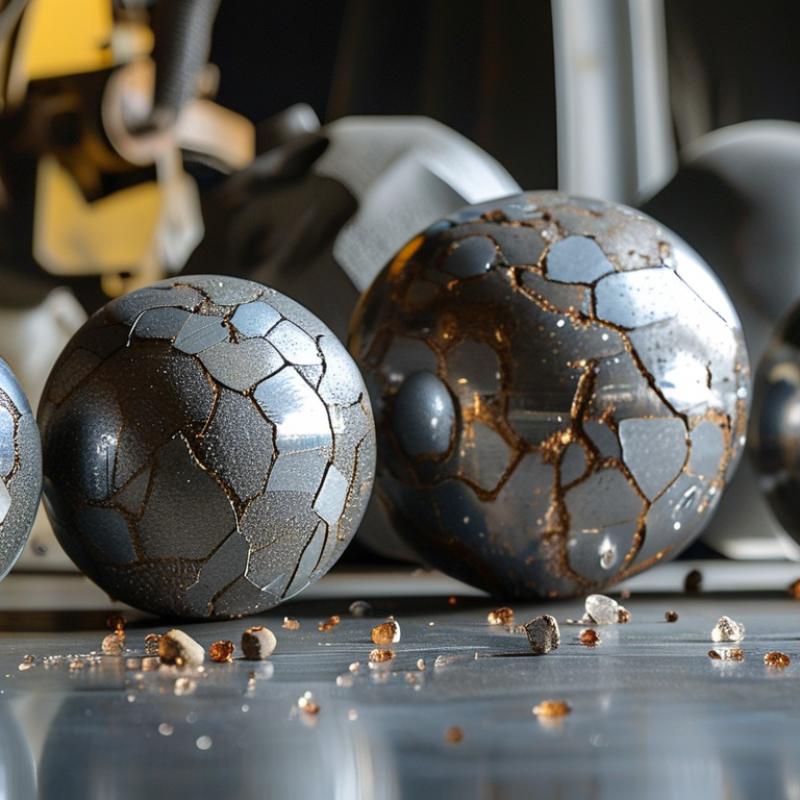
7 Best Grinding Media Balls for Mining Applications

What Grinding Media Balls Are and Their Role in Mining

Grinding media balls are the working tools inside mining mills.

They reduce ore through repeated impact and abrasion. As balls fall, they strike larger particles and break them apart.

Smaller balls create more contact points for fine grinding. Larger balls deliver stronger impact against hard, coarse ore.

Seven common choices include forged steel, high-chrome cast steel, low-chrome cast steel, alloy steel, stainless steel, alumina ceramic, and zirconia ceramic balls.

Forged and alloy steel balls suit many primary grinding circuits because they combine toughness with useful impact strength. High-chrome balls often resist abrasive wear in specific conditions.

Ceramic options reduce metal contamination, but they can cost more and may fracture under severe impact.

No ball is best everywhere.

Ore hardness, mill speed, feed size, slurry chemistry, and operating temperature all change the result. That assumption fails in real plants.

Tips:

Check ball wear by measuring diameter loss and reviewing mill power.

Match ball size to feed size and target product size.

Keep a trial record for wear rate, throughput, and energy use.

Inspect liners and discharge screens together.

A ball may look durable, yet produce poor grinding if its density is unsuitable.

Small details matter.

Also, test changes gradually; an impressive short-term result can hide higher liner wear or unstable circulation.

How to Evaluate Grinding Media for Different Mining Processes

Choosing grinding media for mining requires more than comparing prices. The seven practical options include forged steel, high-chrome cast steel, low-chrome cast steel, stainless steel, alumina ceramic, zirconia, and glass. Forged steel handles tough ores and heavy impact. High-chrome balls resist wear in abrasive circuits. Ceramic media suit fine grinding and contamination-sensitive processes. Zirconia and glass work better in specialized, low-impact applications. That list is only a starting point.

Evaluate ore hardness, feed size, mill speed, slurry chemistry, and the required product size. Hard, coarse ore usually needs strong media with high impact resistance. Fine regrinding may benefit from smaller ceramic balls. In acidic or corrosive pulp, chemical resistance becomes important. Track wear rates, power consumption, liner damage, and mill temperature during trials. A ball that lasts longer may still perform poorly if it reduces throughput. Field results often challenge laboratory assumptions.

Tips: Start with a controlled trial, not a full replacement. Measure ball diameter loss weekly. Check the discharge for excessive metal contamination. Review media shape after several operating hours. Keep records by ore type and feed condition. No test is perfect. Seasonal moisture changes, operator habits, and uneven feeding can distort results. Recheck your conclusions before making a large purchase.

Forged Steel Balls for High-Impact Primary Grinding

Forged steel balls are built for high-impact primary grinding. Their dense structure helps resist fracture when large ore feed drops through the mill. Proper forging also reduces internal weaknesses, although quality can vary between suppliers. Verify it with hardness mapping, impact testing, and breakage records.

The Coalition for Eco Efficient Comminution reports that comminution can consume roughly 25–50% of mine-site energy, depending on ore and circuit design. The U.S. Department of Energy’s Mining Industry Energy Bandwidth Study also identifies crushing and grinding as major energy consumers. Ball selection therefore affects more than wear cost. Diameter, feed size, mill speed, liner design, and slurry density must work together. A harder ball is not automatically better. Excessive hardness may increase cracking under severe impact.

Tips: Start with forged balls suited to the largest feed size. Check surface and core hardness separately. Track ball consumption in grams per tonne. Inspect broken balls weekly. Small changes matter.

For primary mills, larger forged balls often deliver stronger impact against competent rock. However, oversized media can reduce grinding efficiency when the feed becomes finer. A practical trial should compare power draw, product size, steel consumption, and liner wear. Record the results over several operating shifts, not one convenient sample. Ore variability can distort conclusions. That part is easy to overlook. Geological changes, water chemistry, and unstable mill loading may explain poor results better than the balls themselves.

7 Best Grinding Media Balls for Mining Applications

Typical material density for high-impact primary grinding media

Forged and cast steel grinding media generally provide the high density required for impact-driven primary grinding. Ceramic, zirconia, and flint media are lighter alternatives that can reduce iron contamination but are more commonly used in specialized or fine-grinding applications. Values shown are representative material densities and may vary by composition and manufacturing process.

Cast, Chrome-Steel, and Ceramic Balls for Specialized Milling

Mining ball selection is a process decision, not a catalogue exercise. CEEC energy reviews commonly estimate that comminution consumes 25–50% of a mine’s total energy. Media wear therefore affects both power demand and mill chemistry. Seven practical choices include low-chrome cast balls, high-chrome cast balls, forged steel balls, chrome-steel balls, alumina ceramic balls, zirconia balls, and silicon-nitride balls.

Cast balls suit large, abrasive circuits where cost control matters. High-chrome cast balls usually resist oxidation and abrasive wear better than low-chrome grades. Chrome-steel balls offer a useful compromise for secondary grinding. Forged steel remains dependable under heavy impact, especially in larger mills. However, hardness alone can mislead. A 2023 review in Minerals Engineering linked media performance to hardness, toughness, slurry chemistry, and impact conditions. Field samples still matter.

Ceramic balls are lighter. Alumina density is about 3.6 g/cm³, compared with roughly 7.8 g/cm³ for steel. This can reduce impact energy and protect sensitive liners, but it may require tighter mill loading control. Zirconia provides high wear resistance for fine, contamination-sensitive grinding. Silicon nitride handles demanding thermal and chemical conditions, though its cost limits broad mining use. A 2022 industry review reported that ceramic media can sharply reduce iron contamination in fine grinding circuits. That benefit is real, but not universal. Test the ore first. Small operational details decide the result.

How to Select the Best Grinding Media for Cost and Performance

7 Best Grinding Media Balls for Mining Applications

How to Select the Best Grinding Media for Cost and Performance

Grinding media selection affects throughput, liner wear, energy use, and product size. The main options include forged steel balls, high-chrome cast balls, low-chrome cast balls, ceramic alumina balls, zirconia balls, flint pebbles, and glass beads. Each suits different grinding conditions. Forged steel performs well in large mills with heavy impact. High-chrome balls resist wear in abrasive ores and controlled environments. Ceramic options reduce iron contamination but may fracture under severe impact.

Cost needs more than a purchase price. A cheaper ball can wear quickly, increase top-up rates, and change the mill’s charge profile. Measure cost per tonne, not cost per kilogram. Track ball consumption, power draw, discharge size, and liner condition for several weeks. Small differences become expensive at scale.

Test before committing.

Ore hardness, mill speed, slurry chemistry, and ball size all matter. A mixed-size charge may improve grinding, but an unsuitable ratio can create excess fines. In plant trials, operators should inspect fractured balls, not only worn ones. Breakage often signals poor quality, excessive impact, or an incorrect size. There is no universal best media. Even reliable calculations can miss seasonal ore changes, so review the data regularly and adjust carefully.