2026 Top Moulded Case Circuit Breakers for Global Buyers
Selecting the right Moulded Case Circuit Breakers is becoming more demanding for global buyers in 2026. Projects now require stronger safety margins, stable performance, and clearer technical documentation. A breaker must protect conductors, equipment, and people during overloads and short circuits. It must also perform reliably inside hot panels, dusty factories, and crowded commercial switchboards.
Electrical safety educator Jim Phillips often reminds professionals, “Safety is not expensive; accidents are.” This principle remains practical when comparing breaking capacity, rated current, trip curves, insulation voltage, and operating temperature. Buyers should examine real test reports, not only attractive catalog claims. A compact MCCB with a 36 kA breaking capacity may suit a small facility. A larger industrial plant may require 50 kA or more. The correct choice depends on the available fault current.
This guide reviews leading Moulded Case Circuit Breakers for international purchasing teams. It considers protection accuracy, thermal stability, accessories, maintenance access, and supplier support. It also examines certification evidence and regional compatibility. Small details matter. Terminal quality matters. Trip-unit adjustment matters.
Some selections remain imperfect.
A low purchase price can create higher lifecycle costs. An advanced electronic trip unit may exceed the needs of a basic distribution board. Buyers sometimes compare prices before checking coordination studies, which is a costly habit. The strongest decision combines field experience, engineering review, and verified manufacturer data. Global buyers should question unclear specifications and request samples when practical. Reliability is built through evidence, not confident wording.
Moulded Case Circuit Breakers: Definition and Operating Principles
2026 Top Moulded Case Circuit Breakers for Global Buyers
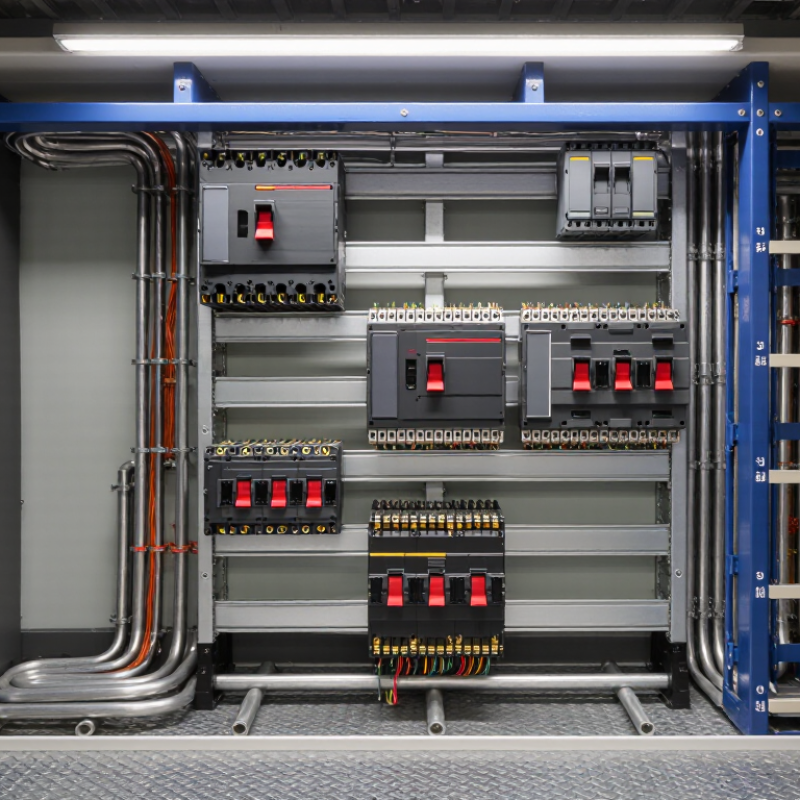
Moulded case circuit breakers, or MCCBs, protect low-voltage circuits from overloads and short circuits. Their insulated moulded housing supports current-carrying parts, trip mechanisms, and arc-control components. IEC 60947-2 defines key requirements for circuit breakers, including performance, testing, and rated short-circuit capacity.
During normal operation, current passes through closed contacts. A thermal element responds to sustained overloads by bending a bimetal strip. This movement releases the mechanism after a time delay. A magnetic element reacts much faster to high fault current. It separates the contacts and drives the arc into an arc chute. Electronic trip units can measure current more precisely and provide adjustable protection. Small details matter.
The IEA Electricity 2024 report expects global electricity demand to grow by about 4% annually from 2024 through 2026. More loads increase the need for correctly coordinated protection. Field inspections often find oversized breakers, loose terminals, or unsuitable interrupting ratings. A catalogue rating is not a field result. Buyers should compare frame size, poles, voltage, frequency, trip settings, and installation temperature. The breaker must interrupt the prospective fault current at its actual location. This is where selection becomes less simple. Even accurate calculations can miss cable length, enclosure heat, or future load growth. Proper verification remains necessary.
Key MCCB Types and Protection Features for 2026
Key MCCB Types and Protection Features for 2026
For 2026 projects, moulded case circuit breakers should match the load, fault level, and installation environment. Thermal-magnetic MCCBs remain practical for general distribution. They respond to long overloads through thermal protection and short circuits through magnetic tripping. Electronic-trip MCCBs offer finer adjustment, faster monitoring, and clearer event data. They suit factories, data rooms, and renewable-energy panels with changing loads.
Pole selection also matters. Two-pole units can protect single-phase circuits, while three-pole and four-pole designs serve industrial systems and neutral switching needs. Check rated current, insulation voltage, and short-circuit breaking capacity together. A higher frame size is not automatically safer. Poor coordination may still cause unnecessary shutdowns. Adjustable long-time, short-time, instantaneous, and earth-fault settings can improve selectivity between upstream and downstream devices.
Tips: Record the measured load before choosing a rating. Verify the available fault current at the installation point. Leave enough space for heat dissipation and cable bending. Test trip settings after commissioning, not only during purchase. Communication modules can support remote alarms and energy records, but they should not replace physical protection. In practice, installation errors remain a common weakness. No selection is perfect. Recheck assumptions when motors, batteries, or variable-speed drives are added later.
Comparing Leading MCCB Options by Application and Performance
2026 Top Moulded Case Circuit Breakers for Global Buyers
MCCB selection should follow the application, not a catalogue ranking. IEA’s Electricity 2024 report expects global electricity demand to grow by about 4% annually through 2026. That pressure reaches factories, commercial buildings, data rooms, and renewable-energy sites. For lighting and small distribution boards, thermal-magnetic MCCBs often provide practical overload and short-circuit protection. Their simpler construction can also reduce commissioning effort.
Performance needs change in harsher environments. Manufacturing feeders may require adjustable electronic trip units, selective coordination, and higher interrupting capacity. Data centers need dependable discrimination between upstream and downstream devices. Solar and battery systems demand careful attention to DC voltage, polarity, temperature derating, and isolation requirements. IEC 60947-2 remains a key reference for low-voltage circuit-breaker testing and verification. UL 489 is commonly specified in North American projects.
A higher current rating is not automatically better. Oversizing may delay fault clearing and weaken cable protection. I have seen project teams compare only amperage, then discover that enclosure temperature changes the usable rating. Check prospective fault current, conductor size, trip curves, terminal space, and service conditions together. MarketsandMarkets continues to identify infrastructure expansion and industrial automation as major MCCB demand drivers, but market forecasts cannot replace site measurements. That is the uncomfortable part. Short-circuit studies and real coordination checks still decide whether an option performs safely.
International Purchasing, Compliance, and Supplier Evaluation Criteria
2026 Top Moulded Case Circuit Breakers for Global Buyers
International purchasing starts with evidence, not attractive pricing. The IEA’s Electricity 2024 report forecasts global electricity demand growth of about 4% in 2024 and 2025. This expansion increases demand for dependable low-voltage protection in factories, buildings, and renewable-energy projects. Buyers should match rated current, voltage, breaking capacity, and operating category to the installation. A higher current rating is not automatically safer.
Compliance documents need careful checking. IEC 60947-2 remains a key reference for moulded case circuit breakers used in industrial systems. Request complete type-test reports, routine-test records, calibration details, and serial-number traceability. Certificates should identify the exact model, configuration, test laboratory, and revision date. Generic documents create risk. They may describe a similar product, not the supplied unit.
Supplier evaluation should include production experience, quality controls, and after-sales response. ISO 9001 certification can support process confidence, but it cannot replace technical verification. Visit the factory when order volume justifies it. Inspect assembly lines, torque tools, insulation testing, and final inspection records. Ask how rejected components are controlled. I have seen impressive samples conceal inconsistent production. That possibility deserves attention. Delivery history, spare-parts access, packaging strength, and documented warranty procedures also matter. A low quotation becomes expensive when testing, customs clearance, or field replacement is poorly planned.
2026 Top Moulded Case Circuit Breakers for Global Buyers
Common rated-current checkpoints used in international MCCB procurement. Actual availability, breaking capacity, voltage rating, and certification depend on the applicable standard and product design.
Purchasing note: Verify IEC 60947-2, UL 489, or GB/T 14048.2 compliance, rated service voltage, short-circuit breaking capacity, trip-unit type, environmental suitability, test reports, and supplier quality documentation before approval.