Smart Heating Solutions
2026 Best Stainless Steel Water Tanks for Global Buyers
Choosing the best Ss Steel Water Tanks in 2026 requires more than comparing prices, volumes, or polished product images. Global buyers must examine steel grade, weld quality, insulation, internal coatings, testing records, and local water conditions. Stainless steel grade 304 suits many general applications, while 316L offers stronger resistance in coastal or chloride-rich environments. No tank is perfect.
The World Health Organization’s Guidelines for Drinking-water Quality emphasizes risk management from source to consumer. The WHO/UNICEF Joint Monitoring Programme reported that 2.2 billion people lacked safely managed drinking water in 2022. These figures underline the importance of hygienic, durable storage. Grand View Research and Fortune Business Insights also identify continuing growth in water storage and treatment infrastructure, driven by urban development, industrial demand, and climate pressure.
Material selection remains central. J.R. Davis, a respected stainless-steel specialist, wrote, “The corrosion resistance of stainless steels is due to the formation of a passive chromium oxide film.” That film is powerful, but it is not magic. Poor cleaning, contaminated welds, and unsuitable water chemistry can still cause failure. Buyers should request traceable mill certificates, welding procedures, pressure or leak-test records, and certifications such as NSF/ANSI/CAN 61 or relevant EN standards.
This 2026 guide compares Ss Steel Water Tanks for municipal, commercial, agricultural, and industrial use. It considers real installation conditions, supplier reliability, maintenance access, and lifecycle cost. Some market claims remain difficult to verify. That is worth admitting. A cheaper tank may become expensive after transport, repairs, or early replacement.
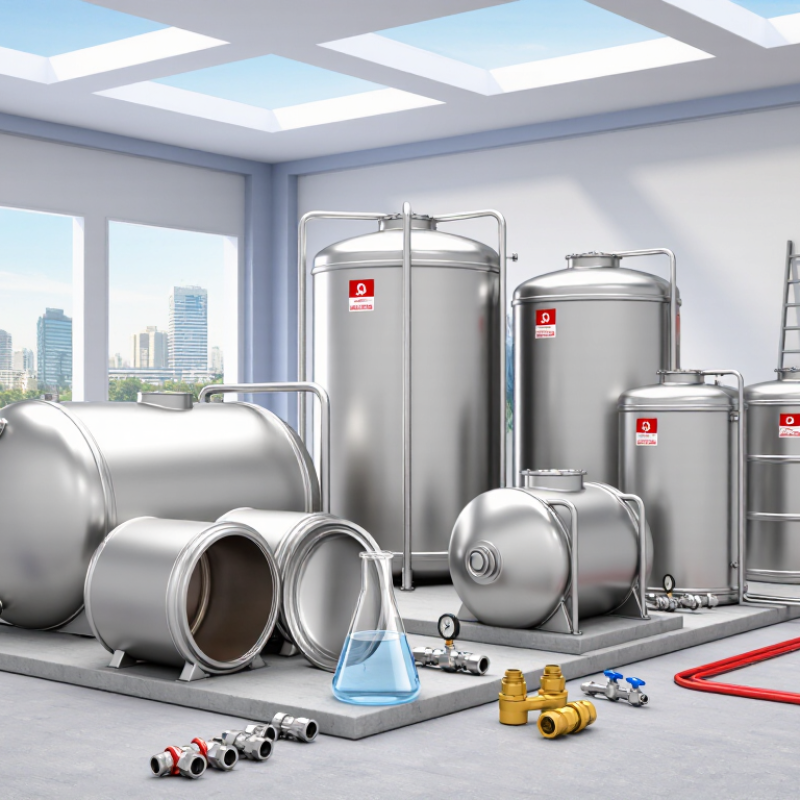
What Defines a High-Quality Stainless Steel Water Tank in 2026
What Defines a High-Quality Stainless Steel Water Tank in 2026
A high-quality stainless steel water tank begins with verified material, not a shiny appearance. A polished surface is not proof of safety. The WHO/UNICEF Joint Monitoring Programme reported that 2.2 billion people lacked safely managed drinking water in 2022. That gap makes contamination control essential. For potable storage, buyers should request material certificates, weld inspection records, and documented cleaning procedures. Stainless steel grades must match the water chemistry. Grade 316 can better resist chloride exposure, while grade 304 may suit controlled, low-chloride water.
Design details reveal manufacturing experience. Smooth internal welds reduce residue traps, and properly finished surfaces support easier sanitation. Passivation should be documented, not merely promised. Components contacting drinking water should meet recognized requirements, such as NSF/ANSI 61 or relevant national standards. The NACE IMPACT study estimated global corrosion costs at about 3.4% of economic output, or 2.5 trillion dollars annually, based on 2013 data. That figure still matters when evaluating lifecycle costs. A cheap tank with poor drainage may become expensive through cleaning, repairs, and early replacement.
Buyers should also inspect manway seals, overflow protection, ventilation filters, and foundation loads. Ask for pressure, leakage, and hygienic inspection results. Small omissions matter. In my view, supplier transparency remains imperfect across markets, so independent verification is valuable. A tank can look excellent and still hide weak welds, unsuitable seals, or incomplete traceability. Test the details.
2026 Best Stainless Steel Water Tanks for Global Buyers - What Defines a High-Quality Stainless Steel Water Tank in 2026
| Quality Dimension | High-Quality Benchmark for 2026 | Typical Practical Range | Why It Matters to Global Buyers |
|---|---|---|---|
| Primary stainless-steel grade | Austenitic stainless steel such as 304/304L for general potable water or 316/316L where chloride or coastal exposure is significant | 304/304L: approximately 18% chromium and 8% nickel; 316/316L: approximately 16–18% chromium, 10–14% nickel and 2–3% molybdenum | The correct grade improves corrosion resistance, service life and suitability for local water chemistry. |
| Material verification | Material certificates and traceability for sheets, plates, pipes and critical fittings | Mill test certificate to the applicable material specification, including chemical composition and mechanical properties | Documented material identity reduces the risk of substitution with a lower-grade alloy. |
| Panel or shell thickness | Thickness selected according to tank diameter, water head, seismic conditions, wind load and support arrangement | Common fabricated tank panels are often approximately 2–6 mm; engineering calculations must determine the final value | Thickness alone does not prove quality; design calculations prevent deformation, buckling and leakage. |
| Capacity selection | Capacity matched to peak demand, emergency reserve, replenishment time and available installation area | Residential and small commercial systems may range from approximately 0.5–20 m³; larger projects can exceed 100 m³ | Correct sizing avoids water shortages, unnecessary stagnation and excessive structural cost. |
| Welding quality | Controlled TIG or equivalent stainless-steel welding, with qualified procedures and trained welders | Full, continuous and clean welds at water-retaining joints; no visible cracks, pinholes, undercut or excessive heat damage | Weld integrity is a primary factor in leak prevention and long-term hygiene. |
| Weld inspection and leak testing | Visual inspection plus appropriate liquid-penetrant, vacuum-box or hydrostatic testing based on the tank design | Water-retention testing commonly uses a controlled fill and observation period defined by the project specification | A documented test record provides stronger evidence than a visual inspection alone. |
| Surface finish | Smooth, clean internal surfaces with controlled weld finishing and no iron contamination | Common stainless-steel finishes include 2B mill finish and mechanically polished finishes; exact roughness depends on the specification | A suitable finish reduces areas where sediment and microorganisms can accumulate. |
| Passivation and contamination control | Pickling or passivation where required, followed by thorough rinsing and protection from carbon-steel contamination | Treatment should follow the stainless-steel grade, fabrication process and applicable project standard | Proper post-weld treatment helps restore corrosion resistance around heated areas. |
| Potable-water suitability | Materials, seals, coatings and internal components assessed for drinking-water contact in the target market | May require compliance with local or regional requirements such as NSF/ANSI/CAN 61, EN or other approved drinking-water regulations | Approval requirements differ by country; buyers should verify the exact destination-market rules. |
| Insulation and temperature control | Insulation specified for climate, water temperature, condensation risk and energy requirements | Optional insulation commonly uses approximately 25–100 mm of mineral wool, polyurethane or another suitable system | Insulation can limit temperature fluctuation, condensation and heat gain, but must not trap moisture against stainless steel. |
| Structural design loads | Engineering review for hydrostatic pressure, wind, seismic loading, snow, lifting and foundation conditions | Design values vary by location and must follow applicable building, seismic and tank-design requirements | A tank suitable for one region may require modification for another climate or seismic zone. |
| Fittings and accessories | Clearly identified inlet, outlet, overflow, drain, vent, access hatch, level indicator and sampling points | Connection sizes are project-specific; stainless steel or compatible approved materials should be used for wetted parts | Correct fittings simplify commissioning, cleaning, inspection and future maintenance. |
| Hygiene and access | Sealed cover, screened vent, hygienic overflow arrangement and safe access for inspection and cleaning | Access openings and internal ladders should be sized and configured according to safety and local code requirements | Good access supports routine inspection without compromising water protection. |
| Expected service life | Long service life supported by suitable alloy selection, sound fabrication, water-quality control and regular inspection | Stainless-steel tanks can serve for several decades in suitable conditions; actual life depends on chloride, acidity, temperature and maintenance | No universal lifespan applies; operating conditions are more important than a generic warranty claim. |
| Documentation package | Technical drawings, capacity data, material certificates, welding records, inspection reports, test results and maintenance instructions | Documentation level should match the project risk, local approval process and end-use application | Complete records simplify customs clearance, installation approval, handover and future service. |
Note: Performance ranges are general industry guidance. Final material grade, thickness, dimensions, testing method and regulatory requirements should be confirmed through project-specific engineering and the regulations of the destination market.