2026 Best Baseboard Heater Thermostat for Global Buyers?
Choosing the 2026 best baseboard heater thermostat requires more than comparing display size or advertised smart features. Buyers must match voltage, load capacity, wiring, sensor design, and regional certification requirements. A 120-volt thermostat cannot automatically replace a 240-volt model. That mistake can create poor temperature control, damaged equipment, or serious safety risks.
The International Energy Agency reports that buildings consume roughly 30% of global final energy and produce about 26% of energy-related emissions. Heating controls therefore deserve practical attention, especially in electrically heated homes and commercial rooms. The U.S. Department of Energy states that suitable thermostat setbacks can reduce annual heating and cooling energy use by up to 10%, although actual savings depend on climate, insulation, occupancy, and equipment behavior. Results vary.
This guide compares leading options for global buyers using technical specifications, installation requirements, control accuracy, user experience, and manufacturer support. It considers cold bedrooms, drafty offices, rental apartments, and rooms with uneven wall temperatures. Smart connectivity matters, but stable operation matters more. A beautiful app cannot compensate for incorrect line-voltage wiring.
The evaluation also follows safety principles reflected in recognized electrical and control standards, including IEC-based product requirements and local installation rules. Professional installation remains advisable when mains voltage is involved. Some product claims are difficult to verify across markets, and published efficiency figures are not always directly comparable. That uncertainty deserves honesty. The strongest thermostat is not universally the most expensive model; it is the one that fits the heater, building, climate, and user’s daily habits.
What Is a Baseboard Heater Thermostat?
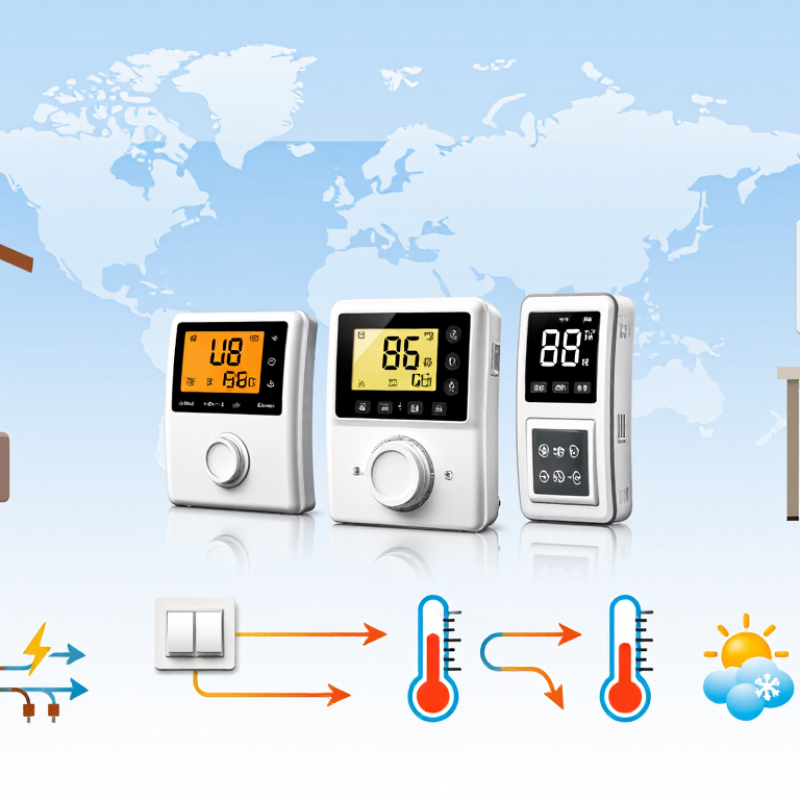
A baseboard heater thermostat is a control device that measures room temperature and switches an electric heater on or off. It is not the heater itself. Most electric baseboard systems use line-voltage thermostats, commonly rated for 120, 208, or 240 volts. Low-voltage thermostats may not work safely with these circuits.
Inside the thermostat, a sensor detects temperature changes near the wall. When the room becomes colder than the selected setting, the device closes the circuit. Heat then moves through the resistance element in the baseboard heater. Digital models usually provide tighter temperature control, while mechanical models remain simple and durable. Small differences matter. A poorly placed thermostat can read warm air from sunlight or drafts.
The U.S. Department of Energy reports that reducing indoor temperature by 7–10°F for eight hours can save up to 10% yearly on heating and cooling costs.
The International Energy Agency’s Buildings report states that buildings consumed about 30% of global final energy in 2022.
These figures explain why thermostat accuracy matters, especially in cold regions. Global buyers should check voltage, maximum amperage, wiring type, temperature range, and local electrical rules before purchase. Compatibility is often overlooked. A thermostat with attractive controls can still be unsuitable for a high-load heater. Professional installation is safer when circuit ratings are unclear. Even experts can misjudge room behavior without measuring drafts, insulation, and heater capacity.
How Baseboard Thermostats Control Temperature and Energy Use
2026 Best Baseboard Heater Thermostat for Global Buyers?
A baseboard thermostat controls comfort by sensing room temperature and switching power on or off. Electric baseboard heaters usually use resistance heating, producing nearly 100% heat at the point of use. However, electricity generation losses still affect total energy performance. The U.S. Department of Energy reports that thermostat setbacks can save up to 10% annually on heating and cooling. Small adjustments matter.
Digital models often measure temperature more precisely than older mechanical controls. Some support scheduling, floor sensors, open-window detection, or remote monitoring. These features can reduce unnecessary heating in empty rooms. The International Energy Agency reports that buildings consume about 30% of global final energy. Temperature control remains a practical efficiency measure. Yet, a lower setting is not always better. Cold surfaces, humidity, and slow baseboard response can create discomfort.
Tips: Match the thermostat with the heater’s voltage and electrical load. Check local installation rules before purchase. Place the sensor away from doors, sunlight, and furniture. A two-degree change may feel minor, but repeated daily savings can become meaningful. Test one room for a week. Record comfort and electricity use. Human habits often weaken the expected result.
2026 Best Baseboard Heater Thermostat for Global Buyers: Temperature Control and Energy Use
A baseboard thermostat switches the heater on and off to maintain the selected room temperature.
This planning chart shows how a higher setpoint can increase estimated electricity use.
Estimated daily consumption is based on a 1.5 kW baseboard heater, an 8-hour heating period,
and a modeled 10% increase in operating time for every 2°C increase above 18°C.
Actual energy use varies with room size, insulation, outdoor temperature, heater capacity,
thermostat accuracy, and heating schedule.
Which Thermostat Features Matter Most in 2026?
In 2026, the best baseboard heater thermostat is not simply the most advanced model. Its key feature is compatibility with the heater’s voltage, wiring, and maximum load. A low-voltage thermostat cannot safely control a line-voltage baseboard heater. Always check the heater label and installation instructions before buying. Local electrical rules also matter for global buyers.
Accurate temperature control improves comfort and may reduce wasted energy. A digital sensor should respond steadily, without frequent clicking or wide temperature swings. Programmable schedules are useful in bedrooms, offices, and holiday homes. Wi-Fi control adds convenience, but it depends on stable internet and secure account settings. Some homes may benefit more from a simple thermostat. More technology is not always better. I would also consider a clear display, manual override, power-loss memory, and a reliable maximum-load rating. Remote sensors can help when the thermostat sits near a drafty door or a cold exterior wall.
Tips: Confirm voltage, wattage, and wiring first. Look for recognized safety certification in your market. Test the temperature reading with a separate thermometer. Keep the thermostat away from curtains, direct sunlight, and furniture. Professional installation is wise when wiring is unfamiliar. One detail is easy to overlook: a quiet relay can matter in a bedroom. Manufacturers sometimes describe “smart” features impressively, yet daily reliability deserves more attention.
How to Match Voltage, Wiring, and Heater Compatibility
2026 Best Baseboard Heater Thermostat for Global Buyers?
Matching a baseboard heater thermostat starts with voltage, not appearance. Check the heater label, circuit breaker, and installation diagram together. Common systems use 120, 208, or 240 volts. Some commercial properties use higher line voltage. Never assume a 240-volt heater can accept a 120-volt thermostat.
The thermostat must support the heater’s electrical load. Calculate load with watts divided by volts. For example, a 2,000-watt heater on 240 volts draws about 8.3 amps. Choose a thermostat rated above that demand, preferably with a reasonable safety margin. A line-voltage thermostat is designed for electric resistance heating. A low-voltage HVAC thermostat is usually incompatible.
Wiring details matter. A single-pole model disconnects one energized conductor, while a double-pole model disconnects both. This difference affects maintenance safety and local code requirements. At 240 volts, the heater often uses two hot wires without a neutral. At 120 volts, one hot wire and one neutral are common, but existing wiring can differ. Inspect the terminal markings carefully.
Small details cause large errors. A thermostat may fit the wall but fail under continuous load. I have found that copied wiring diagrams create false confidence. Verify the circuit with a properly rated tester, turn power off, and confirm zero voltage. Local rules vary between countries and regions, so a licensed electrician should review unfamiliar wiring, especially in older buildings.